

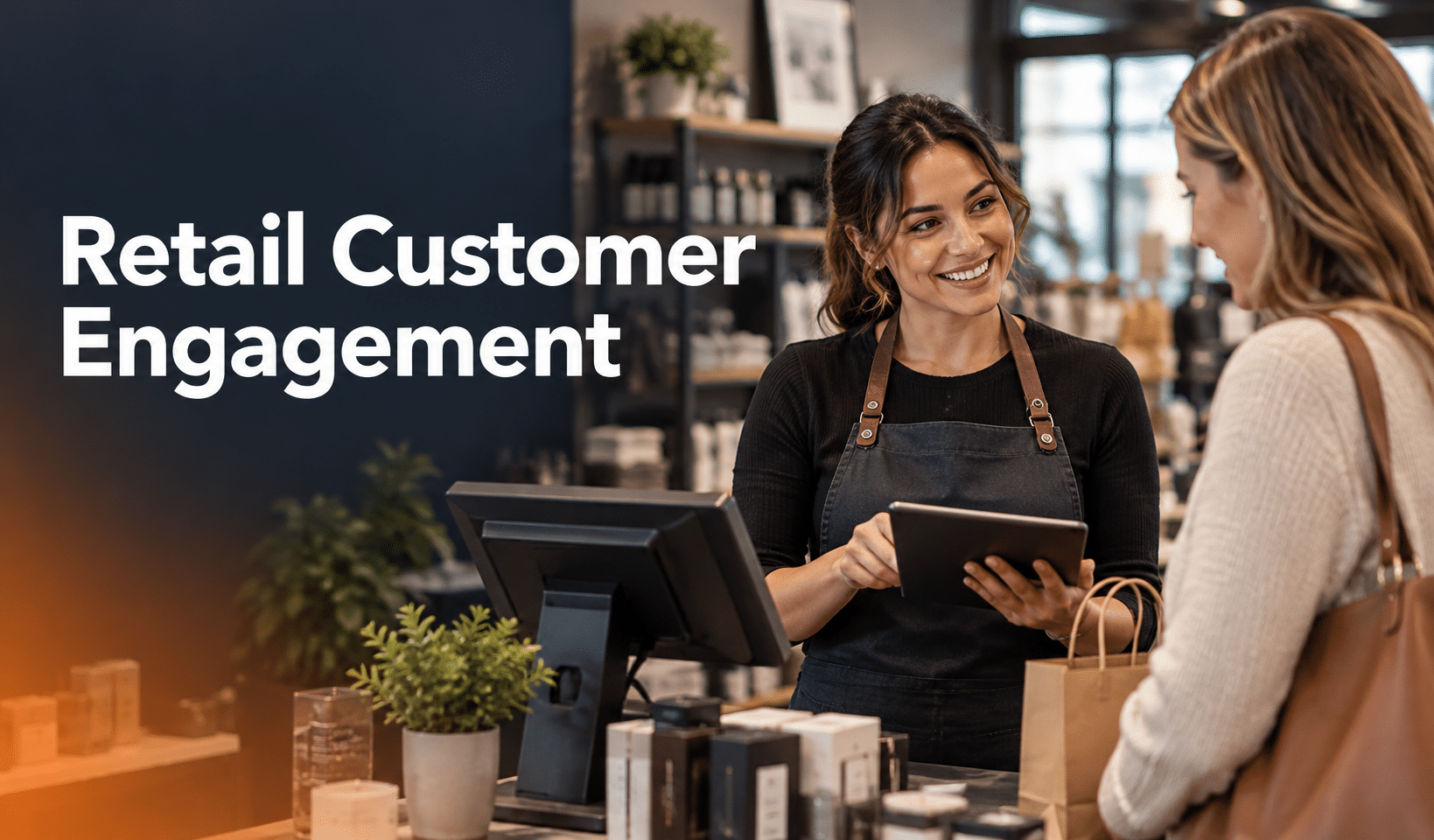
Retail customer engagement is how a store earns repeat visits. It covers each greeting, reward, and message that brings a shopper back.
Here is what the post covers: what retail customer engagement means, why it pays off, seven strategies you can put to work now, and five store examples.
You will also get rules for liquor, tobacco, vape, and CBD retailers, a plan you can run in 30 days, and the five numbers that show whether it works.
Key Takeaways:
- Start With Register Data: Buying history, visit frequency, and lapsed customers give any owner-operated merchant the raw material for personalization and win-back specials.
- Lead With Personalization And Loyalty: These two strategies carry most of the weight, and the other five support them.
- Message With Permission: Text and email marketing delivers when segments come from POS data, consent is documented, and automation handles the routine sends.
- Automate The Routine: AI and automation take over follow-ups and common questions, freeing staff for face-to-face moments.
- Track Five Metrics: Return rate, buying frequency, member revenue share, list growth, and satisfaction show if engagement is paying off.
What is Retail Customer Engagement?
Retail customer engagement means how you interact with your customers to build a relationship, keep them interested, and get them to buy again.
In an owner-run shop, it looks like this:
- Welcoming whoever walks in.
- Asking questions that uncover what they need.
- Following up after a sale by email, text, or loyalty card.
- Staying visible on social media with deals and news.
- Rewarding loyalty with points, discounts, or members-only perks.
Selling is one part of the job. The larger goal is helping visitors feel welcome, remembered, and appreciated enough to return.
Retail Customer Engagement vs Customer Service, CX, And Satisfaction
Engagement spans the whole relationship between a shopper and your company; service, experience, and satisfaction capture one slice apiece.
- Customer service is the assistance someone receives after asking a question or reporting a problem. It is reactive and sits inside engagement.
- Customer experience (CX) is the overall impression a buyer forms over repeated visits and interactions.
- Customer satisfaction is how a patron felt toward a particular moment, usually captured in a survey score.
- Customer engagement is proactive: greeting, following up, rewarding, and inviting shoppers back before they drift away.
High satisfaction scores do not stop regulars from drifting if nobody contacts them between visits. The reverse holds too: outreach works when the in-store customer experience holds up; a reminder text cannot undo a poor visit.
Why Customer Engagement Matters in Retail
Engagement pays off in retail by lifting repeat sales, trimming acquisition costs, and converting satisfied shoppers into a steady referral source. The five reasons below hold for independents of any type, from boutiques to liquor shops.
Repeat Business And Higher Sales
Engaged buyers add lasting value to a company. A 2014 Gallup analysis found that a fully engaged customer delivers an average 23% premium in share of wallet, profitability, revenue, and relationship growth over the typical customer, while an actively disengaged one sits at a 13% discount on those measures.
A boutique texting sale alerts to past clients, or a corner store emailing coupons, turns casual browsers into frequent ones.
Lower Marketing Costs
Retention is cheaper than acquisition. Harvard Business Review reports that acquiring a customer can cost anywhere from five to 25 times more than retaining one, depending on the industry, and it cites Bain & Company research showing that a 5% gain in retention lifts profits by 25% to 95%.
PRO TIP!
Marketing to your existing contacts puts that math to work. A corner liquor shop may email a members-only discount to its regulars in place of paying for broad ads, protecting margin per sale.
Free Word-Of-Mouth Referrals
Satisfied patrons recommend a merchant unprompted. Personal attention and small perks hand them something to talk about.
A vape shop that remembers a regular’s favorite e-juice, or runs a “refer-a-friend” deal, earns new loyal clientele through ordinary conversation.
Builds Loyalty And Trust
Service quality determines who stays loyal. In PwC’s 2025 survey of 5,511 U.S. consumers, 52% said they had stopped using or buying from a brand after a bad experience with its products or services, and 29% had stopped because of poor customer experience, either online or in person.
PRO TIP!
Little gestures build that trust: remembering a name, handing over a sample, topping off a glass. A liquor store hosting a tasting night on the house, or a boutique offering styling advice, makes guests feel appreciated, and appreciated guests return.
Stand Out From The Competition
Personal attention is the edge independents hold over large chains and online giants. An owner who greets regulars by name, or a boutique host offering style tips, delivers something no chain can copy.
The payoff shows up in revenue. A 2020 Bain HBR article found that loyalty leaders, meaning companies that rank at the top of their industries in satisfaction or Net Promoter Score for three or more years, grow revenue roughly 2.5 times as fast as their peers. Customers who feel connected remember your brand and choose it over faceless rivals.
Curious how your own customers are feeling? Use our free Customer Satisfaction (CSAT) Calculator to find out!
7 Retail Customer Engagement Strategies
Seven strategies lift retail customer engagement furthest for independent retailers: a welcoming store experience, data-driven personalization, a usable loyalty program, text and email marketing, connected online and in-store channels, AI and automation, and community building. Each comes with moves a lean team can start this month.
1. Build a Welcoming Store Experience
A welcoming store experience pairs a tidy, easy-to-navigate retail environment with staff who know the products and greet incoming visitors. Training, layout, and in-store events shoulder the bulk of the work.
Staff Training
Trained employees supply the human contact shoppers still expect: PwC’s data adds that 86% of consumers rate human interaction as moderately or very important in their brand experience.
Cover the core skills every retail sales associate needs, beginning with product knowledge, problem-solving, and a warm greeting, and authorize staff to resolve minor issues without a manager.
Consistent, pleasant exchanges leave a lasting impression and bring regulars back.
Store Layout And Visual Appeal
Plan your store layout to match how visitors move: defined sections, tidy shelves, eye-catching displays, and an uncluttered floor.
Place seating where guests can test merchandise or make up their minds. Lighting, color, scent, and music set the mood and express your brand personality.
Experiential Retail
Experiential retail offers a pull that web shopping cannot match. Host classes, wine tastings, DJ nights, or book signings tied to your merchandise, so guests learn, taste, or test new things as they browse. These retail events build memories and positive associations with your shop.
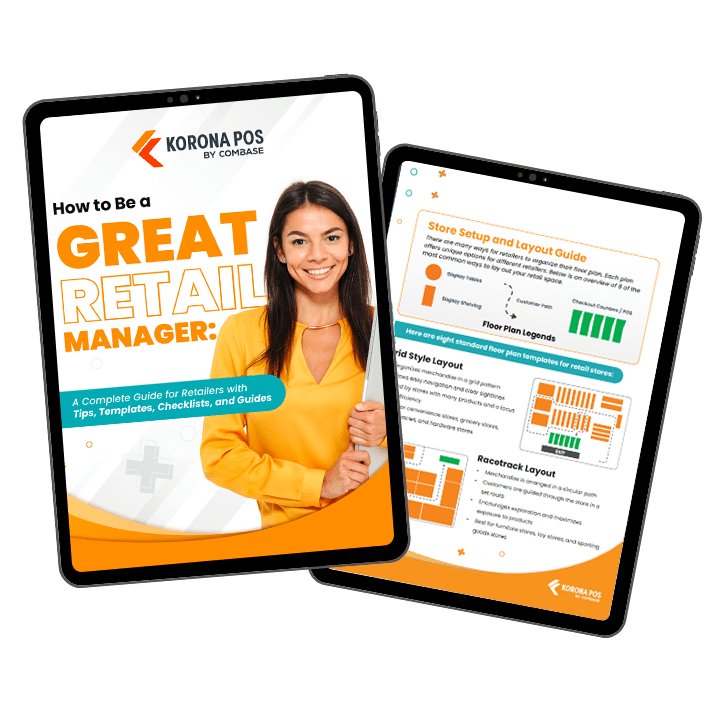
Free printable templates and checklists to help you manage retail operations with ease
2. Personalize With POS And CRM Data
Personalization draws on transaction history and stated preferences to tailor items, promotions, and messages to the individual.
PwC finds that nine in ten consumers will share some personal data in exchange for more personalized service, yet 93% say a brand would lose their trust by mishandling it. Collect the minimum you need, and explain why you ask.
Know Your Customers
Modern POS systems with CRM log what a buyer purchases, how frequently, and the brands or flavors they favor. Apply that history to suggestive selling of complementary items, or to alert shoppers to sales that suit them.
Win Back Lapsed Customers
Shoppers who bought once and did not return form a segment many retailers never contact. Run a POS report of buyers whose last purchase falls outside your typical repurchase cycle (60 days suits a wine merchant, six months a boutique), then write a concise, personal note with a reason to come back.
Capture Preferences At Checkout
Pose one question during the sale and save the answer to the customer profile: favorite brand, preferred size, flavor, or birthday month. Each answer sharpens the next promotion. Secure messaging consent during that same exchange.
Feedback And Surveys
Short surveys and web reviews reveal what buyers want from you. Gather input on a set cadence, act on it, and announce what changed. Visible follow-through builds trust and keeps responses coming.
Customization And Thank-You Touches
Personalized goods (monogrammed apparel, bespoke jewelry, chosen colors and sizes) foster a sense of ownership. A handwritten thank-you card or modest gift for devoted regulars deepens the bond and invites referrals.
3. Run a Loyalty Program Customers Actually Use
A loyalty program succeeds when visitors can join at checkout in seconds and grasp the payoff without a manual. Antavo’s 2026 report shows 43.2% of consumers are more likely to join a loyalty program than a year earlier.
Keep The Program Simple
Pick one earning rule (points per dollar, or a bonus item after ten purchases) and pair it with a reward anyone can understand. Antavo’s release notes that more than a quarter of US loyalty program points go unspent, so plain terms earn their keep.
Enroll At The Register
Fold enrollment into the sale: request a phone number or email, confirm consent, and display the opening perk. Hand all cashiers an identical two-sentence pitch.
Reward What Fits Your Category
Tie incentives to what you sell. Specialty retailers can offer first access to limited releases, tasting invitations, birthday perks, or bonus points on recent arrivals. Confirm state and local rules before discounting age-restricted products.
Add Light Gamification
Tiers, milestone bonuses, and recurring challenges (try three unfamiliar items from one category) sustain regulars’ motivation with little administrative burden.
Use Loyalty Data
Redemptions flow into your CRM, sharpening personalization and flagging who is slipping away. Member history powers the segments in strategy 2 and the messages in strategy 4.
4. Use Text And Email Marketing
Text and email marketing put deals and updates straight in front of audiences, and both work best when marketing is built on your POS data and recipients have opted in. Consistent digital contact maintains top-of-mind awareness and can turn reminders into foot traffic.
Email Marketing
Email handles longer messages: new-arrival news, event invitations, and segmented specials. Personalized campaigns featuring item picks and exclusive deals give readers a reason to open.
Automated sequences (welcome notes, post-purchase follow-ups, abandoned cart reminders) nurture relationships without daily effort.
Every marketing email needs a plain opt-out option, and the FTC’s CAN-SPAM guide says senders must honor opt-out requests within 10 business days.
Text Message Marketing
Texts suit time-sensitive news: a restock, a one-day deal, an event reminder. Marketing texts require prior express written consent, and senders must currently honor opt-outs within 10 business days.
The FCC adopted revised opt-out rules on September 9, 2026, allowing senders to designate an approved opt-out method; they take effect 30 days after publication in the Federal Register.
Archive proof of consent and contact people sparingly so subscribers stay. Retailers of alcohol, tobacco, vape, or CBD goods face added carrier limits on texting, covered later in the age-restricted section.
Social Media Support
Facebook, Instagram, and X offer a direct line for item photos, stories, and fast answers. Reply promptly, post on a predictable rhythm, and show merchandise in use. Sellers of age-restricted goods should read the platform limits before planning paid promotion.
Content Marketing
Useful content (how-to videos, shopping guides, blog posts, infographics) casts you as the go-to expert in town and holds interest between purchases. A weekly post or quick video is easier to sustain than an ambitious calendar that stalls.
5. Connect Your Online Shop And Physical Store
Sound multi-channel retailing links your web storefront and physical location so visitors find matching prices, stock, and branding on every channel.
The U.S. Census Bureau puts e-commerce at 17.1% of U.S. retail sales in the second quarter of 2026, up 12.2% from a year earlier, so most retail dollars still pass through physical stores even as web share climbs.
eCommerce Integration
Integrate your eCommerce platform with your POS and inventory system so stock counts, prices, and promotions line up everywhere.
Hold path-to-purchase journeys, branding, and stock lists consistent across your storefront, any app, and social retail channels, meeting shoppers wherever they encounter you.
Click And Collect
Click and collect, also called buy online, pick up in store (BOPIS), lets customers order on the web and collect in person.
Shoppers gain digital convenience, can inspect or try items at pickup, and skip shipping fees and waits. Pickup hands staff a chance to suggest an add-on.
Local Inventory Visibility
Google’s free local listings and local inventory ads show what sits on your shelves to searchers in your area.
Setup runs through Google Merchant Center help, and Google requires listed availability to match your product pages, making accurate POS inventory essential.
Shopping policies restrict certain categories, so verify eligibility for age-restricted categories before listing them.
Inventory management a headache?
KORONA POS makes stock control easy. Automate tasks, generate custom reports, and learn how you can start improving your business.
6. Use AI And Automation Where They Save Time
AI and automation hand compact teams time back by absorbing routine follow-ups, common questions, and reporting, leaving staff available for in-person service.
Because the AI shift in retail is moving quickly, begin with weekly tasks that carry low risk if a message misses the mark slightly.
Automated Follow-Ups
Trigger welcome messages, post-purchase thank-yous, birthday specials, and win-back notes from POS events, so nobody depends on someone remembering to send them.
AI Chat For Common Questions
A website chat tool can field questions on hours, stock, order status, and policies around the clock, then pass complex ones to a person.
Consumers are selective in where they accept AI: in the PwC survey, 49% would likely use it to track an order or delivery, 29% to make a payment, and 58% felt only somewhat comfortable, or not at all, using AI tools to engage with brands. Define handoff rules, audit transcripts on a set cadence, and leave a human reachable.
AI For Drafting And Reporting
AI assistants can draft promotional copy, condense sales reports, and propose customer segments. Proofread drafts before they ship, and exclude personal customer details from public AI tools.
Skip The Custom App
A custom mobile app frequently outruns the budget and maintenance capacity of a compact operation. Loyalty lookup by phone number along with a consented text list reaches those same shoppers with a fraction of the effort.
7. Build Community Around Shared Values
Community building turns a retailer into a neighborhood hangout through gatherings, shared causes, and content that patrons create. Visitors form stronger bonds with brands that stand for something they recognize.
Host Local Events And Partnerships
Workshops, meetups, charity nights, and tie-ins with nearby businesses gather regulars and introduce your store to their friends. A private group chat or forum extends the conversation between visits, and a referral deal rewarding both the referrer and the newcomer turns members into recruiters.
Support Causes Customers Care About
Select a community charity aligned with your mission, invite guests into donation drives, and report back on the results. Ask guests which causes resonate, and let their answers guide your picks.
Encourage User-Generated Content
Reviews, testimonials, and social posts from buyers supply authentic endorsements that prospects trust. Invite photos and tags, feature standouts, and thank contributors publicly.
Share Sustainability Efforts Honestly
People notice when a retailer backs its values with specifics. Describe eco-friendly practices (recycling, sustainable sourcing, energy-efficiency upgrades) with concrete facts, leaving slogans behind.
Almost all customer engagement runs through your point of sale. Smart, modern retail POS systems gather the information behind promotions, personalization, and beyond.
KORONA POS integrates with vertical-specific loyalty programs, connects with eCommerce platforms, and optimizes customer relationship management. We partner with an array of software applications that specialize in customer engagement.
Retail Customer Engagement For Age-Restricted And Specialty Stores
Sellers of age-restricted goods rely on in-store experiences, loyalty programs, and permission-based email, since major ad platforms restrict or prohibit promotion of alcohol, tobacco, vaping products, and CBD, and carriers limit texting for several of those categories.
The tactics below operate inside those limits. State and platform rules differ, and this section offers general information, not legal advice.
Know Your Platform Limits
Meta permits alcohol ads only with age and country targeting, and never aimed at anyone under 18.
THC and other psychoactive cannabis products cannot be advertised at all, while CBD ads demand LegitScript certification and prior written authorization from Meta, run in the United States alone, and must exclude minors. Meta prohibits tobacco ads outright, vapes and e-cigarettes included.
PRO TIP!
Google Ads policy bans tobacco ads too, and approves only certified advertisers, limited to topical hemp-derived CBD products in California, Colorado, and Puerto Rico. Policies shift, so read the current rules before spending on ads.
Follow Text And Email Consent Rules
Obtain consent through a plain disclosure at signup, store opt-in records, and process opt-outs inside the legal deadline.
Texting adds a second layer, as carriers screen messages covering alcohol, tobacco, vaping, and cannabis products.
One SMS provider’s carrier restrictions guide says alcohol texts need proper age-gating, tobacco faces tight limits, and vaping and CBD messages are prohibited on US carriers.
Provider policies vary, so confirm your category with yours before building a text contact base, and favor email where texting is unavailable.
State laws can layer on extra requirements, so have counsel review your signup language and send cadence.
Build Age Verification Into The Experience
Make ID checks part of the welcome: greet, ask, thank. At rewards signup, confirm legal age before enrolling anyone in marketing for age-restricted products.
The same guide adds that alcohol text opt-ins need a website age gate with manual date-of-birth entry; an “I am 21+” checkbox is insufficient. Ask counsel if and how to record the check.
Tactics That Work Within The Limits
- In-store tastings, demos, and classes, wherever the law allows.
- A membership club with perks linked to new arrivals and limited releases.
- Email to adult subscribers who opted in, plus texts solely where your provider and the carriers accept your category.
- A fully completed Google Business Profile and accurate local listings, so neighbors can find you.
- Community ties such as sponsorships and partnerships, inside local rules.
How to Build a Customer Engagement Plan For Your Store
A customer engagement plan fits into 30 days for a lean operation and demands two to three hours a week once setup ends. Work through the six steps in order, then judge the results with the metrics in the next section.
1. Know Your Customers (Days 1 to 3)
Begin with the data your POS already holds. Pull purchase history, top sellers, and visit frequency, then sort customers into the types of customers in retail you serve: daily shoppers, weekend buyers, first-time visitors, and loyal fans.
Picture a bottle shop that notices heavy weekend traffic from wine drinkers and sends that segment weekend deals. Budget about two hours; the records come included with your POS.
Discover Advanced Analytics and Custom Reports
Speak with a product specialist and learn how KORONA POS can work for your business.
2. Choose Your Channels (Days 4 to 5)
Select channels you can sustain. The floor offers service, personal greetings, and product suggestions; digital options include text, email, Instagram, Facebook, and loyalty apps.
A vape retailer, for instance, might rely on in-store signage and an email roster, as Meta prohibits vape ads and carriers generally block vape texts. Plan on an hour, at little to no cost depending on your messaging tool.
3. Set Clear Goals (Day 5)
Name the outcome you want before launching anything: repeat visits, bigger transactions, survey responses, or a larger email and text audience.
One goal per month sharpens the effort. A fashion boutique might aim to add 100 subscribers in 30 days through a raffle promotion. Half an hour is enough, at no cost.
4. Offer Real Value (Days 6 to 14)
Engagement sticks when patrons receive benefits they prize: loyalty points, birthday treats, favorite-item alerts, or first access to the latest arrivals and tasting nights.
A convenience store, for example, can give away the tenth coffee and run a text club with flash discounts. Set aside three hours for setup and a staff briefing, and size the reward budget yourself.
5. Automate Where You Can (Days 15 to 21)
Let your POS and CRM track purchases and send follow-ups automatically, and queue promotions, reminders, and win-back messages in your email or text tool.
A liquor retailer could email wine drinkers on Thursdays with weekend specials. Allow three hours; tool pricing varies, and many include a free tier.
6. Get Feedback (Days 22 to 26)
Ask guests what they think, then act on the answers. Try a chat as customers pay or a compact survey by email or Google Forms.
A modest discount for completing a two-question survey can lift responses. Separate review requests from any reward, because Google’s review policy prohibits incentives in exchange for reviews, and invite all customers alike, including the unhappy ones.
A smoke shop might ask what gear to stock next and use the answers to shape its order. Allow an hour and the cost of the discount.
In the final days, 27 to 30, review results against the metrics below, retain what works, drop what does not, and set next month’s goal.
How to Measure Retail Customer Engagement
Five metrics reveal whether retail customer engagement is working: repeat purchase rate, purchase frequency, loyalty share of sales, list-growth rate, and customer satisfaction.
Draw them from your POS reports and CRM, gather them on a compact retail KPI dashboard, review them on a regular rhythm, and ignore all other numbers until these five stabilize.
Repeat Purchase Rate
Repeat purchase rate tracks the portion of buyers who return inside a chosen window. Divide customers with two or more purchases by all customers who bought, then multiply by 100. It is a direct signal that engagement is shifting behavior.
Purchase Frequency
Purchase frequency counts average transactions per customer over a period. Divide total transactions by identified customers. A climb after a promotion or loyalty launch shows shoppers visiting with greater frequency.
Loyalty Share Of Sales
Loyalty share of sales is the slice of revenue that comes from members. Divide revenue from members by total revenue. A rising figure shows that checkout enrollment is working and members are spending.
List-Growth Rate
List-growth rate is the monthly net change in email and text subscribers: add new opt-ins, subtract unsubscribes. Monitor opt-outs as carefully as signups: a rising opt-out rate warns of messages that arrive too often or feel generic.
Customer Satisfaction
Customer satisfaction (CSAT) is the average rating people give a particular interaction on a brief survey. Pose one or two questions in person or by email, then convert the answers into a score with the free CSAT Calculator.
Review And Adjust
Check the five numbers regularly and adjust one variable at a time. Compare email open rates with text response rates, track repeat-visit frequency, and review foot traffic and revenue after a promotion ends. A fashion boutique that draws a bigger crowd after text blasts than after emails should favor text.
Use KORONA POS to Help Build Deeper Connections With Your Customers
KORONA POS supports retail customer engagement through built-in customer relationship management and loyalty tools.
Cashiers attach a customer to a sale to view past purchases and loyalty details at the counter, and the loyalty program awards points that shoppers redeem in-store, with customizable rewards and perks.
Merchants who need advanced loyalty can connect partners, including RewardUp, Bottlecapps, and bLoyal. Reporting and analytics surface sales data across multiple locations, and KORONA offers eCommerce tools for online sales.
Ready to deepen your customer relationships and boost engagement? Sign up for a free demo with KORONA POS today and see how smarter tools can drive meaningful retail success.
Speak with a product specialist and learn how KORONA POS can power your business.
Frequently Asked Questions
What is retail customer engagement?
Retail customer engagement is the continuing exchange between a shop and its buyers across the whole purchase journey: the greeting at the door, the follow-up text, the rewards club, the tasting night. The aim is repeat business and word-of-mouth, which makes it a relationship effort as much as a sales tactic.
What is the difference between retail customer engagement and customer service?
Service reacts; engagement initiates. A support desk answers a question after it is asked, but engagement reaches out ahead of time with follow-ups, rewards, and invitations. Service lives inside the broader relationship and applies solely to moments when a shopper needs assistance.
What are the best customer engagement strategies for small retail stores?
Begin with personalization powered by POS data, a streamlined loyalty program, and opt-in messaging. Those three rely on information a shop already owns. Add a welcoming floor, online-offline alignment, automation, and community gatherings once the core is running.
How do you measure retail customer engagement?
Track how often buyers return, how frequently they purchase, what portion of revenue comes from members, how quickly your contact list grows, and how satisfied people say they are. POS reports, CRM records, and a brief survey supply the numbers. Compare them at regular intervals, especially before and after promotions.
How does a loyalty program improve customer engagement in retail?
Points and perks give shoppers an incentive to come back, and a redemption tells you what a member buys. That history fuels tailored offers and win-back campaigns. Quick signup at checkout and easy-to-grasp rewards convert occasional visitors into regulars.
How often should a store message customers by text or email?
Start light: one email and one or two texts a month, then tune the pace by watching opt-outs and replies. Message consenting contacts alone, and share material that is useful or timely. A climbing unsubscribe rate signals that your cadence or content needs adjusting.