

Key Takeaways:
- Cloud-based POS systems, hosted on remote servers, offer flexibility, remote access, and lower upfront costs.
- Server-based POS or on-premises systems provide greater control and customization and may offer better offline functionality.
- Both systems have unique advantages and limitations that affect cost, security, and scalability.
- Your choice should align with your business’s size, growth plans, and security and technical needs.
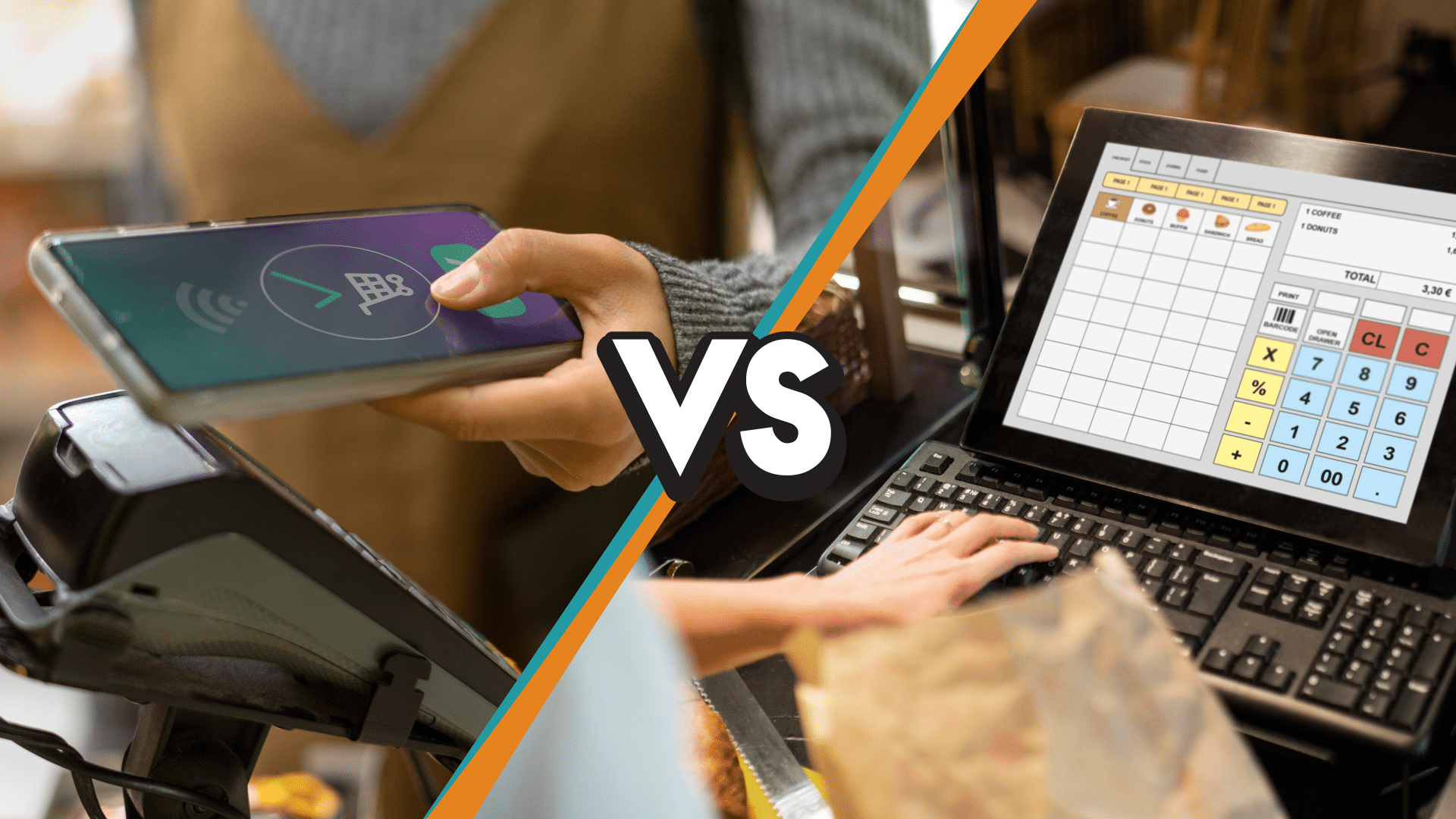
Choosing the right point-of-sale (POS) system is a critical decision for any business. The choice between cloud-based and server-based point-of-sale systems significantly influences factors such as POS cost, scalability, functionality, and reliability, all of which are crucial to a business’s operations and success.
In this post, we’ll dissect the key differences between cloud-based and server-based POS systems and their pros and cons. Whether you’re managing a bustling theme park or a cozy retail operation, understanding these differences is crucial—it will guide you to the POS solution that best fits your needs.
What Are the Differences Between Server-Based and Cloud-Based POS Systems?
In the early days of computerized cash registers, POS systems were installed and run on a computer or server on the physical business premises. However, with the advent of the internet, an abundance of cloud-based systems have entered the market, offering a decentralized and online alternative and a significant difference between POS and cash registers. Even large retailers like Home Depot have adopted advanced solutions such as the Home Depot’s POS system, showcasing how modern technology can streamline operations and improve the customer experience
Each POS system has unique features, infrastructural requirements, and pros and cons that can significantly affect your business operations. Let’s take a look at the principal differences between the two systems:
| Category | Server-Based POS System | Cloud-Based POS System |
|---|---|---|
| Setup |
|
|
| Infrastructure & Maintenance |
|
|
| Security & Data |
|
|
| Integration & Customization |
|
|
| Accessibility & Scalability |
|
|
| Cost Structure |
|
|
| Updates |
|
|
Setup
Server-based systems require installing servers, terminals, and peripherals on-site, often with technical help and some disruption to your operations. Cloud-based systems mostly involve configuring software and connecting to the internet, so you can be up and running faster with less technical help.
Security & Data
Server-based systems keep your data inside your network, so only authorized people on-site can access it. That gives you full control, but you’re responsible for backups and data protection. Cloud-based systems store encrypted data in secure remote data centers and back it up automatically, so you can likely restore it if your device crashes.
Infrastructure & Maintenance
Server-based systems run on local servers and usually need a dedicated IT team for hardware and software upkeep. Cloud-based systems are hosted and maintained by the provider, which reduces your IT workload and lets you access them from anywhere. If your business is in a remote area with poor connectivity, server-based may be the better fit.
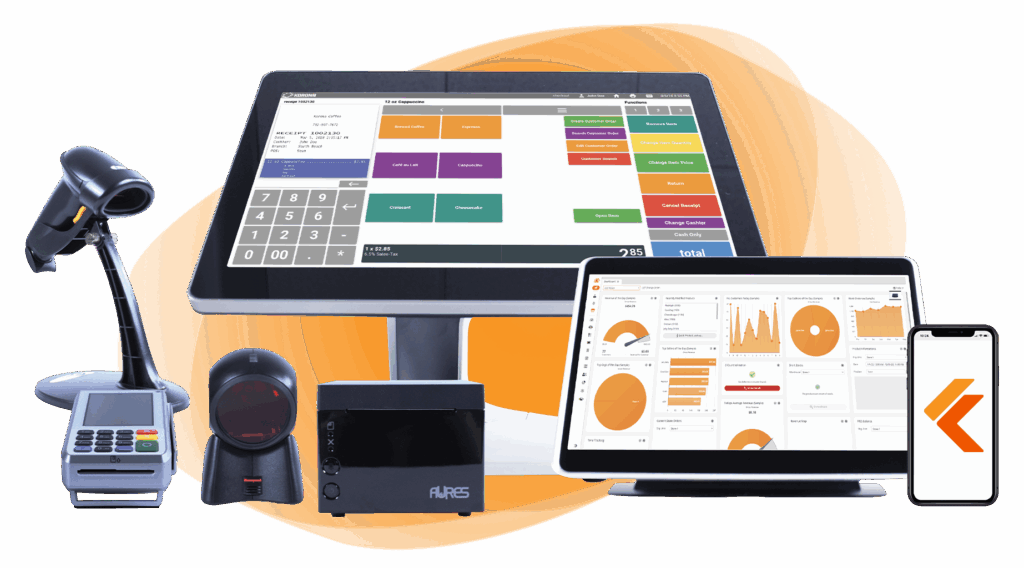
Build Your Own POS
Whether you run a retail store, café, or admissions booth, we have the point of sale hardware designed for your specific needs. Start building your ideal POS system now.
Integration & Customization
Server-based systems let you modify the interface and functionality more than most cloud systems do, and they support complex integrations with local tools like inventory or accounting software. That takes IT expertise, though. Cloud-based systems offer less customization, but they integrate faster through APIs and third-party apps, including a wide range of credit card processors.
Accessibility & Scalability
Server-based systems are usually limited to your business location, and scaling can mean new hardware and installations. Cloud-based systems work on any device with an internet connection, so you can manage operations, push updates or promo codes, or relocate remotely, and add volume or features without major upgrades.
Cost & Updates
Server-based systems cost a lot upfront, plus ongoing fees for maintenance, updates, or reinstallation after a crash. Updates are manual and done by qualified staff, and the system can’t be used during them, so they happen infrequently or after hours.
Cloud-based systems cost less upfront and usually run on a monthly or annual subscription that includes maintenance and automatic updates. Price depends on your business size, features, and sometimes transaction volume, and larger enterprises may pay more in the long run.
Schedule a KORONA POS Demo Today
Speak with a product specialist and learn how KORONA POS can power your business needs.
Server-Based POS Systems: Pros and Cons
Server-based POS systems offer many advantages, assuming they fit your business’s unique mode of operation. Here are the pros and cons of an on-premise solution:
| Factor | What it means for your business |
|---|---|
| Pros of server-based POS systems | |
| Control | You have direct control over your hardware and software. That lets you customize configurations, such as integrating with specialized in-house applications or tailoring reports to specific metrics. |
| Offline functionality | The system is hosted on local servers, so it keeps working if your internet goes down. This matters for businesses in rural, low-network, or storm-prone areas, and for any business that can’t afford downtime. |
| Data security | Data stays on-site, which gives you more control over how it’s protected. This helps businesses with strict security requirements or sensitive customer information. |
| Cons of server-based POS systems | |
| Higher initial costs | Hardware, software licenses, and installation cost more upfront. That can be too much for smaller businesses or those with limited capital. |
| Maintenance requirements | You’re responsible for ongoing maintenance, updates, and security patches. That may mean hiring IT staff or paying an outside provider, which adds to your operating costs. |
| Limited accessibility | Access is generally limited to on-site terminals. That makes remote management and monitoring hard, especially for businesses with multiple locations. |
Cloud-Based POS Systems: Pros and Cons
Cloud-based POS systems are often marketed as a state-of-the-art solution to the white-label POS system problems of the olden days—and in many ways, they are. But while these systems offer flexibility and modern features, they also have advantages and disadvantages.
| Factor | What it means for your business |
|---|---|
| Pros of cloud-based POS systems | |
| Flexibility | Cloud-based POS systems let you access your data from anywhere with an internet connection. That helps multi-location and mobile businesses manage everything centrally with real-time updates, and it supports remote work and quick operational changes. |
| Lower upfront costs | Subscription-based pricing lowers the initial cost compared to server-based systems. Small and mid-sized businesses can get a full-featured POS without a large capital investment. |
| Automatic updates | The provider handles updates and maintenance, so you always run the latest version with current features and security patches. That reduces the load on your IT resources and the risk of running outdated software. |
| Cons of cloud-based POS systems | |
| Dependence on internet | Cloud-based systems need a stable internet connection, although some can run in offline mode. Outages can limit access to your POS and disrupt business, which is a real drawback in areas with unreliable service. |
| Recurring costs | Subscription fees lower your initial expense, but they add up over time. Include them in your budget planning to avoid surprises. |
| Data security | Providers use strong security measures, but you rely on their protocols and practices. That can be a problem for businesses with specific security requirements or highly sensitive data, since you have less control than with an on-premise system. |
Should You Choose a Cloud-Based or Server-Based POS System?
Choosing between a cloud-based and server-based POS system (or desktop POS) depends on your business’s unique model, needs, and resources. The best cloud-based systems on the market offer greater flexibility, lower upfront costs, and easier scalability, making them a strong choice for growing businesses or those with multiple locations. On the other hand, server-based systems provide more control and potentially better offline functionality, which better serve businesses that prioritize in-house management, network independence, and data security.
For a tailored solution, consider KORONA POS. Our cloud-based POS solution makes it easier to securely store, transfer, and access your business’s data, no matter where you are.
Cloud-Based or Server-Based POS Systems: Final Thoughts
Selecting the right POS system is essential for optimizing your business operations. Cloud-based POS systems offer flexibility and scalability, while server-based systems provide control and, potentially, better offline functionality. Evaluate your business’s size, budget, security needs, accessibility needs, and internet reliability to make the best choice.
Explore KORONA’s POS system offerings for a comprehensive point-of-sale solution and discover how we can support your business’s growth.
Get started with KORONA POS today!
Explore all the features that KORONA POS has to offer with an unlimited trial. And there’s no commitment or credit card required.
Frequently Asked Questions
What is the Difference Between Cloud POS and On-Premise POS?
Cloud-based POS systems operate over the internet and are managed by service providers, offering flexibility and remote access. On-premise POS systems, also known as server-based systems, are hosted locally and require in-house hardware and software management.
What is the Difference Between Cloud POS and Legacy POS?
Legacy POS systems are older, traditional POS solutions common before the advent of modern technologies. They are typically on-premise but are characterized by antiquated technology and limited scalability. Cloud POS systems, on the other hand, are more contemporary and scalable than legacy systems and use internet-based technology.
How Much Does Cloud POS Cost?
The cost of POS systems depends on many factors. Cloud POS systems usually operate on a subscription basis with monthly or annual fees, which can vary based on the system’s features and your business’s scale. Initial costs are lower than those of server-based systems, but consider long-term costs before making a decision.