

Opening a coffee shop is exciting, but keeping it profitable requires strategy. Location, menu design, staff management, inventory control, and customer loyalty all determine whether your shop thrives or struggles.
Many coffee shops fail within their first year because owners overlook operational fundamentals. You’ll learn how to choose the right location, build an efficient menu, hire and train quality staff, manage costs, and create loyal customers.
Apply these proven strategies to build a coffee shop that generates steady revenue and stands out in a competitive market.
Key Takeaways:
- Solidify your core identity early. A unique concept helps you stand out from competitors and guides every future business choice.
- Prioritize location and layout efficiency. The right spot attracts natural foot traffic, while a smart floor plan keeps service fast for every guest.
- Invest in the right technology. A coffee-specific POS system manages your inventory and loyalty programs without complicating daily tasks.
- Monitor your financial data closely. Regular reporting highlights your most profitable items and helps you adjust prices when ingredient costs change.
Define Your Coffee Shop Concept
Choosing the right coffee shop concept lays the foundation for everything from your menu to your marketing strategy. Understanding what sets different coffee formats apart helps you position your business for success and attract your ideal customers.
Defining a concept is the foundation of a profitable business. It shapes the customer experience and streamlines marketing efforts. Here are some popular coffee shop concepts to consider:
Why Your Coffee Shop Concept Matters
Your concept differentiates you in a crowded market where over 65,000 coffee shops compete for attention. A clear concept guides operational decisions, attracts specific customer segments, and creates memorable experiences that build loyalty beyond just serving good coffee.
Popular Coffee Shop Concepts to Consider
Specialty Coffee Shops focus on premium, single-origin beans and artisanal brewing methods. Data shows 45% of American adults had specialty coffee in the past day, up 80% since 2011, making specialty offerings increasingly mainstream rather than niche.
Drive-Thru Models prioritize speed and convenience for on-the-go customers. Chains like Dutch Bros grew from 500 stores in 2021 to over 1,000 by late 2025, proving strong demand for efficient service formats.
Café-Bakery Hybrids combine fresh pastries with coffee service. Multiple revenue streams increase average ticket values while appealing to customers seeking both quality beverages and artisanal baked goods.
Coworking Cafés serve remote workers and students with comfortable workspaces, reliable WiFi, and all-day beverage options. The remote work trend sustains demand for productive café environments beyond quick coffee runs.
Industry Trends Supporting Concept Choices
The specialty coffee segment grows at 10.4% annually, significantly outpacing traditional coffee shops. Younger consumers drive growth; those aged 25-39 consumed more specialty coffee than any other age group. Consider how your concept aligns with premiumization, convenience demands, or experience-focused offerings when planning your coffee shop.
Create a Coffee Shop Business Plan
A solid business plan transforms your coffee shop idea into a roadmap that guides decisions and secures funding. Learning how to open a coffee shop successfully starts with documenting your vision, analyzing the market, and mapping out operations and finances.
Why a Business Plan Matters
Lenders and investors require detailed business plans before committing capital. Beyond funding, your plan forces you to think through critical details like customer demographics, equipment needs, staffing levels, and profit projections before spending a dollar.
Market Research: Know Your Customers
Nearly 70% of people aged 60 and older drink coffee, while 63% of those aged 23-59 consume it regularly. Identify your target demographic, research local competitors, and survey potential customers about their preferences. Understanding whether your area wants quick grab-and-go service or a comfortable workspace influences location and design choices.
PRO TIP
Visit competitor locations at different times to observe customer flow, peak hours, and popular menu items.
Operations Planning
Detail your daily workflow from opening procedures to closing checklists. Include supplier relationships, inventory management systems, quality control standards, and equipment maintenance schedules. Operational clarity prevents chaos when you’re slammed with customers and helps train staff consistently.
Marketing Strategy
Outline how you’ll attract customers through social media, local partnerships, loyalty programs, and community events. 92% of consumers trust recommendations from friends and family over other forms of promotion. Budget for both pre-launch buzz and ongoing customer acquisition beyond grand opening week.
Financial Projections
Coffee shops with seating require $100,000 to $350,000 in startup capital, while drive-thru models range from $100,000 to $250,000. Project revenue based on realistic customer counts (200-300 cups daily for small shops), calculate break-even timelines, and maintain working capital for three to six months of operating expenses. Include equipment costs, rent, payroll, inventory, and permits in your calculations.
PRO TIP
Build three financial scenarios: conservative, moderate, and optimistic to prepare for different market conditions and avoid overconfidence in projections.
Free printable templates and checklists to help you manage retail operations with ease
Choose the Ideal Location
Your location determines how many customers walk through your door each day and whether you’ll pay rent you can afford. Coffee shops typically thrive in locations with high foot traffic, such as downtown areas, near universities, or in trendy neighborhoods
Urban Hubs
High density ensures constant foot traffic throughout the day. Rent is expensive, but the visibility reduces your marketing spend. These areas attract tourists and city dwellers who appreciate a vibrant atmosphere.
Suburban Strips
Residential areas offer loyal, repeat customers. Families and remote workers often seek a “third place” near home. These locations usually offer more parking and lower overhead costs than downtown spots.
Office Districts
Office Districts experience weekday morning rush hour traffic. Target areas where professionals need their pre-work caffeine fix and afternoon pick-me-ups. Consider whether your location suits quick grab-and-go service or offers comfortable workspaces for remote workers.
Transit Centers
Commuters prioritize speed and convenience. Small kiosks near train stations or bus stops maximize high-volume, quick-service sales. You need a streamlined menu to serve customers who are in a hurry.
Foot Traffic Patterns
Foot Traffic Patterns matter more than raw numbers. Observe whether people rush past or linger. Visit potential locations during different times to gauge actual customer behavior, not just theoretical counts.
Design Your Coffee Shop Layout
Your layout determines how smoothly customers move through your space and how efficiently baristas work. Poor design creates bottlenecks and confusion, while smart planning maximizes every square foot and keeps service flowing during rush hours.
Front of House Layout
Position the counter near the entrance where customers see it immediately upon walking in. Allow 1.5–1.8 square meters per seat—roughly 30-35 seats for a 60-square-meter café.
Mix two-person tables for quick turnover with communal tables that encourage laptop users to linger.
Leave at least 1.2 meters between order lines and seating areas to prevent traffic collisions. Separate ordering from pickup stations completely to avoid customer confusion.
Back of House Layout
The “barista triangle” places your espresso machine, grinder, and knock box within a single step of each other. Position refrigeration directly below or beside the espresso machine, no exceptions.
Arrange stations in workflow sequence: espresso, milk, filter, finishing, and pickup to avoid baristas crossing paths.
PRO TIP
Allocate 25-30% of total space to service areas and barista workspace. Store supplies within arm’s reach but out of the customer’s sight.
Tips for Maximizing Space and Workflow
- Use vertical storage: Mount shelves for cups, beans, and supplies to keep counters clutter-free
- Install under-counter equipment: Grinders, refrigerators, and dishwashers beneath work surfaces save valuable bar space
- Create modular furniture arrangements: Moveable tables and chairs let you adjust the layout as you learn what works
- Design 360-degree workstations: Allow baristas to rotate and reach everything needed without crossing paths
- Add noise-canceling materials: Cork boards or felt wall panels reduce echo in industrial spaces with concrete floors
- Position retail displays strategically: Place baked goods before the register for upselling so customers know their options before ordering
- Maintain clear sightlines: Avoid blocking views with tall shelves—use lower display cases to define areas without fragmenting the space
Obtain Licenses, Permits, and Insurance
Navigating coffee shop licensing requirements protects you from fines, forced closures, and legal headaches. Start the licensing process at least three months before opening—ideally six months out—as approval timelines vary widely between jurisdictions.
Essential Permits: Every coffee shop needs a business license from your city or county ($50 to thousands of dollars depending on location), a food service permit from your health department, and a sales tax permit to collect state taxes. If you operate an espresso machine, officials classify it as “food processing”, which triggers stricter health inspections. A certificate of occupancy approval confirms that your space meets building codes before you can open doors.
Required Insurance: General liability insurance covers customer injuries from spills or food reactions, business property insurance protects your equipment and interior, and workers’ compensation is legally required in most states if you hire employees.
💡 Avoiding Legal Pitfalls:
- Check zoning laws before signing a lease—not all commercial spaces allow food service
- Display permits visibly; inspectors can shut you down for missing paperwork, even if you have approvals
- Keep food handler certifications current for all staff who touch beverages or food
Order Equipment and Supplies
Choosing the right coffee shop equipment balances quality with budget constraints while ensuring you can deliver consistent drinks. Essential equipment typically costs between $15,000 and $40,000, though your final number depends on whether you buy new, used, or lease.
Must-Have Equipment
Espresso Machine: A two-group espresso machine costs $5,000 to $15,000, serving as your primary workhorse. Single-boiler entry-level models struggle during rushes, while dual-boiler systems maintain separate temperatures for brewing and steaming.
Espresso Grinder: Commercial grinders run $1,500 to $4,000. Never skimp here—inconsistent grinds ruin espresso regardless of machine quality. Your grinder affects taste more than most beginners realize.
Drip Coffee Brewer: Commercial brewers with servers cost $500 to $2,500. Basic black coffee accounts for roughly 30% of sales at most shops, so reliable batch brewing prevents bottlenecks during morning rushes.
Refrigeration: Under-counter units store milk, syrups, and perishables within arm’s reach. Commercial refrigerators cost $2,000 to $5,000. Position them directly beside espresso machines to minimize barista movement.
Water Filtration System: Filtration systems run $500 to $2,000 but protect expensive machines from scale buildup and improve coffee taste noticeably.
Optional Equipment
Commercial Blender: High-powered blenders cost $200 to $1,000 for smoothies and blended drinks. Add only if your target customers want these beverages—otherwise, save the counter space.
Coffee Roaster: Small roasters start under $3,000, while a 3-kilo model costs around $14,000. In-house roasting creates unique flavors but demands expertise and adds complexity best saved for later expansion.
Bulk Coffee Grinder: Separate grinders for drip coffee cost $500 to $1,500. Only necessary if selling retail beans or running a high-volume batch-brew service.
Sourcing Equipment Cost-Effectively
Consider Leasing: Equipment leasing offers 12-60 month terms with low monthly payments and potential tax deductions. Preserve cash for operations while accessing professional-grade machines immediately. Many suppliers offer lease-to-own programs in which the equipment becomes yours at the end of the term.
Buy Refurbished: Quality used espresso machines from reputable dealers cost 40-60% less than new models. Verify warranties and service history before purchasing.
Negotiate Bundles: Suppliers often discount when you purchase espresso machines, grinders, and brewing equipment together. Ask about package deals that include installation and training.
Finance Strategically: Some retailers offer 0% interest for 12-36 months on qualifying purchases. Compare financing terms across multiple vendors before committing.
Plan Your Coffee Shop Menu
Menu decisions drive both customer satisfaction and profitability. Knowing what to sell at your coffee shop requires balancing trendy offerings with timeless favorites while ensuring every item supports your bottom line.
Beverage Selection
Traditional coffee flavors, vanilla, mocha, and caramel (or hazelnut), remain top sellers. Balance classic lattes and drip coffee with specialty drinks like matcha lattes and cold brew to appeal to different customer preferences and drinking occasions.
Food Offerings
Pair beverages with pastries, breakfast sandwiches, and grab-and-go snacks that complement coffee orders. Shops using bundled “coffee + pastry” deals increase average ticket size significantly. Source items from local bakeries if baking in-house isn’t feasible. Food margins are lower than those for beverages, but they drive morning traffic and encourage longer visits.
Seasonal and Local Ingredients
Seasonal specials and limited-time promotions keep menus fresh and exciting. Feature pumpkin spice in autumn, peppermint mochas in winter, and berry-based drinks in summer.
PRO TIP
Partner with local roasters for unique single-origin beans or nearby farms for fresh milk. Seasonal items create urgency and social media buzz while justifying premium pricing.
Menu Sizing Strategy
Optimal menus feature 30-40% premium specialty drinks and 60-70% standard offerings. Too many options create waste, inventory complications, and decision paralysis.
PRO TIP
Streamlining from 25 drinks to 10 best-sellers reduced waste and improved margins for successful shops. Start lean, then add based on customer requests rather than guessing what might sell.
Profit Margin Considerations
Beverage gross margins typically range from 70% to 85%, with specialty coffee averaging 80%. Overall, business profit margins average 15-25% for established shops. Ingredient costs should stay between 15% and 25% per item. Black drip coffee delivers the highest margins, while elaborate drinks with alternative milks and specialty syrups run thinner but command higher prices.
Popular Menu Items
High-Margin Beverages:
- Drip coffee
- Americano
- Cold brew and nitro cold brew
- Classic lattes and cappuccinos
Trending Specialty Drinks:
- Matcha lattes
- Oat milk lattes
- Iced brown sugar shaken espresso
- Seasonal flavored lattes (pumpkin spice, peppermint mocha)
Food Pairings:
- Croissants and pastries
- Breakfast sandwiches
- Avocado toast
- Protein boxes and overnight oats
Functional Add-Ons:
- Mushroom coffee with adaptogenic benefits
- Collagen or protein powder shots
- CBD-infused options (where legal)
- Alternative milk choices (oat, almond, coconut)
Create a Pricing Strategy
Smart pricing balances profitability with customer expectations while covering your operating costs. Coffee shops typically apply a markup of 4-5 times the cost of materials, but successful pricing requires understanding both your numbers and your market position.
Understanding Markups and Margins
Markup means adding a percentage to your costs. Margin represents profit as a percentage of the selling price. Ideal beverage and food costs for cafés typically run 15-25% per item. A $1.20 latte sold for $4.50 yields a 73% margin, enough to cover rent, labor, utilities, and profit after expenses.
Factors Affecting Your Prices
Location and rent: Labor remains the largest operating expense for coffee shops, alongside rising occupancy costs. Urban shops with premium rents need higher prices or volume to break even.
Competition: Study what successful franchise operations charge locally. Position yourself based on quality and experience, not just matching competitors dollar-for-dollar.
Ingredient costs: Coffee bean prices have reached near multi-decade highs due to climate-related disruptions. Track commodity fluctuations monthly and adjust prices when major costs increase 5% or more.
Customer perception: Value-based pricing considers perceived worth; quality drinks and richer experiences let you charge premium rates customers willingly pay.
How to Calculate Menu Prices
Step 1: Calculate total cost per item: Add ingredient costs plus allocated overhead (labor, rent, utilities per cup). Example: A 12oz latte costs $0.65 in espresso and milk + $0.55 in overhead = $1.20 total cost.
Step 2: Determine target margin: Beverage gross margins typically range from 70% to 85%, with specialty coffee averaging 80%. Using retail inventory management systems helps track actual costs versus theoretical margins.
Step 3: Apply pricing formula: Selling Price = Cost ÷ (1 – Target Margin %)
For the latte: $1.20 ÷ (1 – 0.73) = $4.44, rounded to $4.50
Step 4: Verify competitive positioning: Compare your $4.50 latte against local competitors charging $4.00-$5.50. Adjust based on quality, ambiance, and customer willingness to pay.
Maintaining Healthy Margins
Overall business profit margins average 15-25% after accounting for all operating expenses, though newer establishments often see 10% during initial years. Coffee shops need to run a 25-30% markup to make a profit—the lower the markup percentage, the better your efficiency.
Track margin performance:
- Black drip coffee: 80-90% gross margin
- Espresso drinks: 75-85% gross margin
- Specialty lattes: 70-80% gross margin
- Food items: 60-70% gross margin
Protect against shrinkage: Regular inventory audits ensure accurate cost tracking and identify potential shrinkage issues. Implementing loss prevention measures catches over-portioning, waste, and theft that silently erode margins.
Adjust strategically: Monitor your cost structure monthly and adjust pricing when operational costs increase significantly. A 25¢ price bump on a drink you sell 300 times daily equals an extra $27,000 per year without losing customers.
Choose a Coffee Shop POS System
A reliable coffee shop POS system becomes your operational backbone, managing transactions, inventory, staff, and customer relationships from a single central hub.
A slow POS system doesn’t just frustrate your team; it also slows down your business. It sends customers elsewhere, so choosing the best system for your coffee shop requires evaluating speed, functionality, and scalability.
Key Features of a Coffee Shop POS
Flexible cashier permission levels, tip management, time-based discounts, promotions, payroll and accounting integrations, loyalty programs, scalability, inventory management, and modern payments are the core requirements.
Quick service POS systems handle custom modifiers for milk types, syrup shots, and drink sizes without slowing down baristas during rushes. KORONA POS delivers these features, along with real-time inventory tracking that alerts you to low stock before you run out of essentials.
Speak with a product specialist and learn how KORONA POS can power your business.
Payment and Mobile Options
Modern systems handle various payment types, split bills, and process refunds efficiently. Accept contactless payments, digital wallets, and traditional cards through integrated payment processing.
Self-service kiosks reduce wait times while freeing staff to focus on drink preparation. KORONA POS supports multiple payment terminals and mobile ordering options that expand revenue channels.
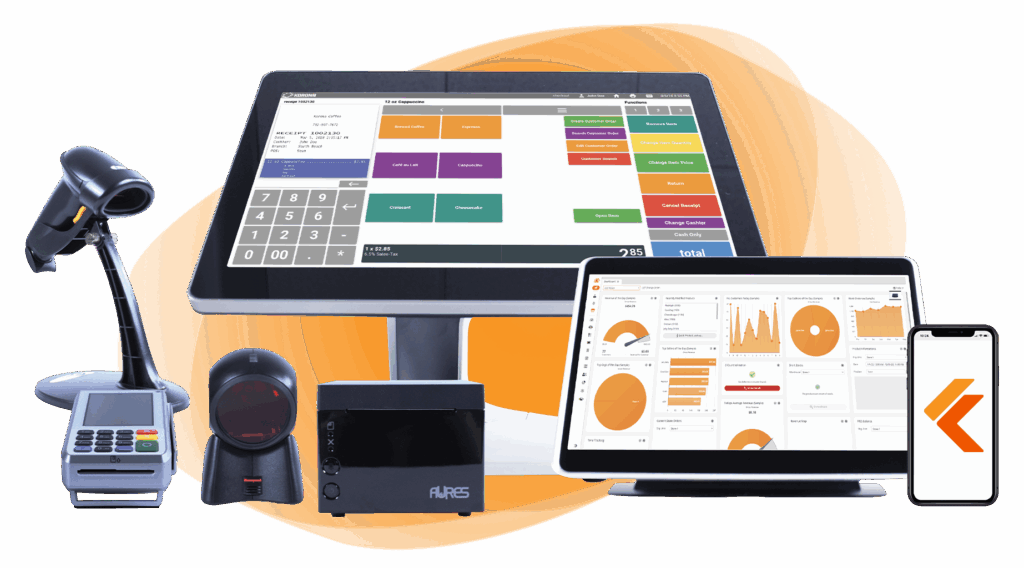
Build Your Own POS
Whether you run a retail store, café, or admissions booth, we have the point of sale hardware designed for your specific needs. Start building your ideal POS system now.
Scalability and Integration Features
A coffee shop with a retail side can benefit from retail-focused POS capabilities that let you sell branded merchandise, whole beans, and brewing equipment alongside beverages. Multi-store POS systems centralize reporting, inventory, and employee management across locations as you expand.
Major chains like Starbucks rely on integrated POS technology to maintain consistency and efficiency. KORONA POS scales from single cafés to multi-location operations without requiring system changes or expensive upgrades.
Cloud Access and Reporting
Cloud-based POS allows coffee shop owners to access data anytime, from anywhere. Monitor sales performance, track labor costs, and adjust inventory remotely through secure dashboards.
KORONA POS provides automatic updates, offline functionality during internet outages, and detailed analytics that identify peak hours, bestselling items, and product-category-specific profit margins.
Discover Advanced Analytics and Custom Reports
Speak with a product specialist and learn how KORONA POS can work for your business.
Hire and Train Staff
Finding the right coffee shop employees is a critical step in building your brand’s reputation. Your team transforms a one-time visitor into a lifelong regular. Skilled baristas keep service levels steady even during the heaviest morning rushes.
- Determining Staffing Needs: Calculating how many employees you need depends on your shop’s size and projected sales volume. Overstaffing hurts your profits. Understaffing leads to long waits and burnt-out workers. Balance your schedule to maintain coverage for both the counter and the kitchen.
- Training for Consistency: Proper training covers more than just pulling espresso shots. Staff must master your POS system and follow food safety protocols. Uniform drink quality keeps customers happy and minimizes ingredient waste. Well-prepared teams handle stress better and provide a professional atmosphere for your guests.
- Standardizing Across Locations: If you plan to grow, you need systems for multi-location management. Standardized training manuals guarantee that a latte in one shop tastes exactly like the one in another. Clear expectations help you uphold high standards as your business footprint expands.
Host a Soft Opening
A soft opening gives you a chance to test the efficiency of your coffee shop operations and fix unexpected problems before the big day arrives.
Train staff in a live but controlled environment, fine-tune your food and service, and solicit real feedback from invited friends, family, and select customers. Test your POS system, kitchen workflow, and equipment under real service conditions to catch issues when the stakes are low.
PRO TIP
Limit attendance to 20-30 guests and provide feedback forms asking about drink quality, service speed, and ambiance. Starting with a simplified menu helps your team perfect key items rather than struggling with full offerings.
Schedule your soft opening one week before the grand opening, enough time to implement changes without losing momentum.
Market Your Coffee Shop
Attracting customers requires deliberate marketing across multiple channels. Building effective loyalty programs and implementing integrated payment solutions creates the foundation for sustainable growth beyond just posting on social media.
Offline Marketing Strategies
Spend at least 4 hours per week visiting local establishments such as apartment offices, restaurants, medical offices, salons, and fitness centers to introduce yourself and distribute coupons or promotional materials.
Host coffee tastings, music nights, or workshops, and collaborate with local vendors to deepen community ties.
Sponsor local sports teams or participate in farmers’ markets to establish your shop as a neighborhood gathering spot rather than just another coffee vendor.
Online Marketing Strategies
Instagram and TikTok thrive on visual coffee culture. Share latte art, behind-the-scenes prep, and customer moments.
Focus on 1-2 platforms consistently rather than spreading yourself thin across every channel. Encourage customers to post photos and tag your location for organic reach. 62% of respondents check a restaurant’s social media before deciding to visit.
Customer Loyalty Programs
Digital loyalty apps with QR code scanning integrate seamlessly with your POS to automatically track purchases.
Reward repeat visits with perks like free drinks after a certain number of purchases or birthday specials.
KORONA POS loyalty features build customer profiles showing purchase history for personalized promotions that drive repeat business without manual tracking effort.
Email and SMS Campaign Tips
Direct messaging keeps your shop at the top of a customer’s mind. Use email newsletters for monthly updates or text alerts for limited-time afternoon discounts. Personalize these messages based on purchase history to increase relevance.
Segment audiences by purchase behavior and send personalized offers that connect directly to your customer database. Limit frequency to avoid overwhelming customers; weekly emails and occasional promotional texts work better than daily blasts.
Engage and Retain Customers
Keeping existing customers loyal costs far less than constantly chasing new ones. Repeat customers spend more per visit and recommend your shop to friends. POS reporting and analytics track purchase patterns and identify your most valuable regulars for targeted retention efforts.
Retention Tips:
- Remember regular customers’ names and favorite orders, personal recognition creates emotional connections
- Send birthday rewards and personalized offers based on past purchases
- Host community events like coffee tastings or latte art workshops
- Respond to social media comments and share customer photos
- Solicit feedback regularly and act on suggestions to show customers their opinions matter
Common Challenges and How to Overcome Them
Running a coffee shop brings predictable obstacles that can derail even passionate owners. Recognizing these challenges early helps you develop strategies before problems damage profitability or customer satisfaction.
High Competition and Market Saturation
Standing out in a crowded marketplace requires more than good products. You need a clear brand identity that connects with your target customers.
Focus on what makes your business different, whether that’s specialized expertise, superior service, or a unique product selection.
PRO TIP
Compare different POS systems to find technology that supports your competitive advantages rather than working against them. Build relationships through personalized service and community involvement. Customers choose businesses they trust, not just the cheapest option.
Staff Turnover and Training Costs
Losing trained employees disrupts operations and drains resources. Create a workplace where people want to stay by offering competitive pay, flexible scheduling, and genuine growth opportunities.
Simplify onboarding with clear documentation and self-service tools that reduce the learning curve.
When employees feel valued and see a future with your company, they’re less likely to leave. Cross-train your team so one person’s departure doesn’t create a crisis.
Seasonal Sales Fluctuations
Revenue swings create cash flow headaches and inventory problems. Plan ahead by analyzing past sales patterns to predict slow periods.
Diversify your product mix to appeal to different seasons—add complementary items that sell year-round. Strong inventory management helps you avoid overstocking before a slump or running out during peak times.
PRO TIP
Build cash reserves during busy months to cover expenses when sales dip. Consider promotional campaigns or limited-time offers to drive traffic during typically quiet periods.
Maintaining Consistent Quality
Quality slips damage your reputation fast. Establish clear standards for products, services, and customer interactions. Regular training keeps everyone aligned on expectations.
Use checklists and procedures to maintain consistency, even when different employees handle the same tasks.
Gather customer feedback actively and address complaints quickly. A reliable small business POS system tracks sales patterns and customer preferences, helping you spot quality issues before they escalate.
Adapting to Changing Customer Expectations
Customer preferences shift constantly, and businesses that don’t adapt get left behind. Pay attention to feedback, reviews, and buying patterns.
Building strong customer relationships through loyalty programs and personalized communication helps you understand what people actually want.
Test new approaches on a small scale before rolling them out completely. Stay aware of broader retail trends affecting your industry, but don’t chase every fad. Focus on changes that align with your brand and serve your specific customers.
Simplify Your Coffee Shop Operations with KORONA POS Today
Running a coffee shop means juggling orders, inventory, staff schedules, and customer expectations all at once. KORONA POS handles the complexity so you can focus on what matters—serving great coffee and building relationships.
Built for coffee shops, bakeries, franchisees, and retail businesses, the system streamlines everything from morning rush transactions to end-of-day reporting.
GOOD TO KNOW
With KORONA POS, you get processing flexibility with dual pricing options and payment agnostic capabilities that work with your preferred processor.
When questions arise, KORONA POS delivers industry-leading support that actually picks up the phone and solves problems fast.
Stop wrestling with disconnected systems and manual workarounds. Schedule a personalized live demo to see how KORONA POS fits your coffee shop’s specific needs, or call 833-200-0213 to speak with a specialist today.