

Key Takeaways:
- Washington is not accepting new dispensary license applications, so the only two paths in are buying an existing license or qualifying through the state’s Social Equity Program.
- License fees rose on July 1, 2026: the application fee stays at $250, but the annual license fee is now $1,781 per location, with inflation-based increases starting in 2027.
- Washington charges a 37% cannabis excise tax on top of regular sales tax, the highest cannabis tax burden in the country.
- The market is mature and shrinking, with sales declining for five straight years to about $1.1 billion in 2025, so buy into a store with a plan for thin margins.
Washington was the second state to legalize recreational cannabis, and more than a decade later its market looks nothing like the newer states making headlines. Sales have declined for five consecutive years, landing around $1.1 billion in 2025 across roughly 500 licensed retail stores.
Opening a dispensary here is also unlike opening one almost anywhere else, because the Washington State Liquor and Cannabis Board (WSLCB) stopped accepting new retail license applications years ago. That leaves two ways in: purchase a license from a current holder, or qualify through the state’s Social Equity Program. This guide covers both paths, what they cost, and what it actually takes to run a store in the country’s highest-taxed cannabis market.
What Washington’s Cannabis Market Looks Like in 2026
Washington’s market peaked at nearly $1.5 billion in 2021 and has slid every year since, mostly because prices keep falling rather than because customers left. Volume has held fairly steady while flower prices sit among the lowest in the nation, squeezing every store’s margins.
Layer on the steepest cannabis taxes in the country, and the math gets demanding. Consider Marcus, who bought an operating store outside Tacoma in 2024 using revenue numbers from the seller’s best year, 2021. The store still runs, but only because he renegotiated his lease and rebuilt his menu around higher-margin categories after year one missed projections by double digits.
Washington Dispensary License Costs and Rules
The state fees themselves are modest compared to the cost of acquiring a license. As of July 1, 2026, the numbers are:
- Application fee: $250, unchanged under the new law
- Annual license issuance and renewal fee: $1,781 per location, up from $1,381 under House Bill 2681
- Future increases: starting July 1, 2027, the annual fee adjusts automatically with the Seattle-area Consumer Price Index
Washington also imposes structural rules that shape what you can build. You must have lived in Washington for at least six months before applying, no person can hold more than five retail licenses, and retailers cannot hold a producer or processor license, so vertical integration is off the table entirely.
Path 1: Buy an Existing Retail License
Because the WSLCB is not accepting new retail applications, most new owners enter by purchasing a license from a current holder, either as a bare license or as part of an operating store. The buyer must be approved by the WSLCB before the transaction closes, which means completing background checks, providing proof of residency, and disclosing all funding sources. Plan on the approval process taking a few months, and longer if your ownership structure or financing raises questions.
Price is the wild card. Licenses in prime jurisdictions once traded for seven figures, but five years of declining sales have cooled valuations, and what you pay now depends heavily on location, the store’s books, and whether local license caps limit competition nearby.
PRO TIP!
Before signing anything, pull the license’s violation history from the WSLCB and review the store’s Cannabis Central Reporting System records against its books. You inherit the location’s reputation with regulators, and a license with compliance baggage is worth far less than a clean one.
Path 2: Apply Through the Social Equity Program
The Social Equity Program is the only route to a new license in Washington, created for applicants from communities disproportionately harmed by cannabis prohibition. The WSLCB has opened application windows periodically, most recently in 2024, and the program runs through 2032, so future windows are possible. Qualification is based on a scoring system that factors in past cannabis convictions, family convictions, and residency in a disproportionately impacted area.
The program has moved slowly, with many successful applicants still working to secure locations and funding. A rule change effective January 1, 2026, helps: qualifying equity licensees who cannot find a location in their allocated county can now move the license to another county if their application score clears that county’s threshold. If you may qualify, watch the WSLCB Social Equity page for the next window rather than paying secondary-market prices.
Find a Compliant Location
Washington gives cities and counties the power to ban cannabis businesses, and dozens of jurisdictions still do, so confirm local rules before falling in love with a property. State law also requires retailers to sit at least 1,000 feet from schools, playgrounds, child care centers, parks, libraries, transit centers, recreation facilities, and game arcades open to minors.
Local governments can shrink some of those buffers, and Seattle has reduced several to as little as 250 feet, which is why so many stores cluster there. If you are buying an operating store, the location question is already answered; verify that the jurisdiction has no pending moratoriums or cap changes that could strand the license at renewal.
Finance the Purchase
Cannabis remains federally illegal, so traditional banks will not finance a dispensary acquisition even though many Washington credit unions accept cannabis deposits. Most buyers combine personal capital with seller financing, cannabis-specific lenders, or private investors, and seller financing is especially common in license sales because sellers understand the banking gap firsthand.
Whatever the structure, the WSLCB vets every dollar. All funding sources must be disclosed and approved as part of the license transfer, so undocumented cash or last-minute silent partners will stall or sink the deal. Our guide on how much it costs to open a dispensary breaks down the operating costs beyond the acquisition itself.
Meet Security and Traceability Requirements
Washington’s security rules are codified in WAC 314-55-083 and apply from day one of ownership. Requirements include:
- ID badges for every employee
- A visitor log is retained for three years
- Alarm systems on entry points and windows
- 24-hour video surveillance covering the full facility, with footage stored for at least 45 days
Washington does not use Metrc. Instead, every licensee reports inventory and sales data to the state’s Cannabis Central Reporting System (CCRS), and unlike most states, the reporting burden falls on you rather than a state-run live system. A dispensary POS system that automatically generates compliant CCRS reports removes the most error-prone task in Washington cannabis retail. Our dispensary tech stack guide explains how the remaining software pieces fit together.
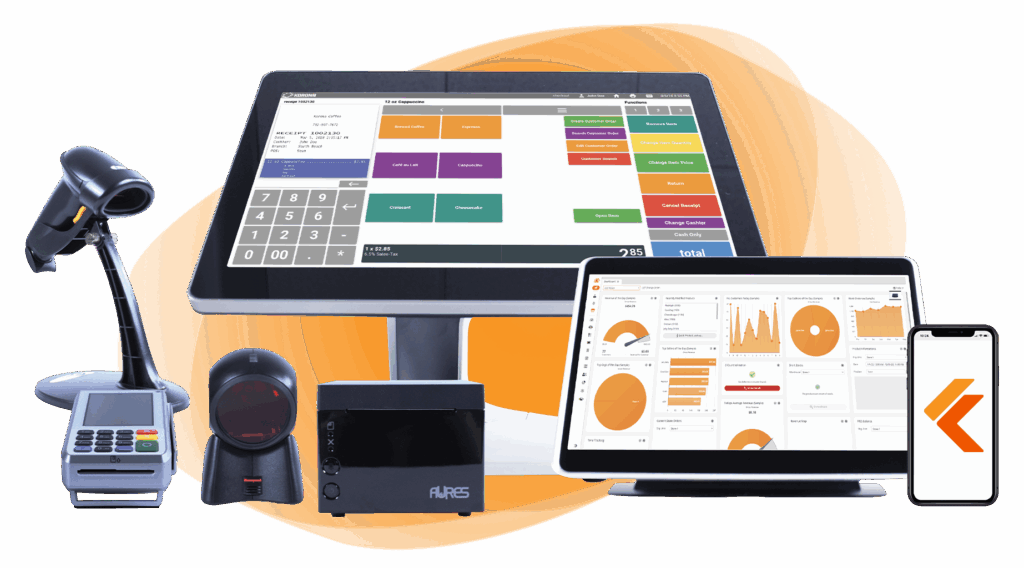
Build Your Own POS
Whether you run a retail store, café, or admissions booth, we have the point of sale hardware designed for your specific needs. Start building your ideal POS system now.
Build Your Team
Washington has one of the highest minimum wages in the country, above $17 per hour in 2026, and budtender pay runs above that floor in competitive metros. Staffing is worth the spend, because in a state where hundreds of stores sell the same brands at similar prices, knowledgeable budtenders are one of the few durable differentiators.
Larger stores should budget for a compliance lead and a floor manager as well. With CCRS reporting, camera retention rules, and WSLCB inspections in play, a dedicated compliance role protects the license that you just paid a premium to acquire.
Plan for Washington’s Cannabis Taxes
Washington levies a 37% excise tax on every retail cannabis sale, collected at the register on top of the regular state and local sales tax. That is the highest cannabis tax rate in the country, and it shapes everything from your pricing strategy to your exposure to the illicit market.
One meaningful carve-out exists: stores holding a medical endorsement can sell Department of Health compliant products to registered patients exempt from the 37% excise tax. Federal Section 280E adds the final layer, preventing cannabis businesses from deducting ordinary operating expenses, so hire a cannabis-specialized accountant before your first quarter, not after it.
PRO TIP!
Major card networks still refuse cannabis transactions, so build your checkout around cash and compliant debit from the start. Our post on why dispensaries don’t take cards explains the options.
Is Opening a Dispensary in Washington Worth It in 2026?
It can be, but the opportunity is in acquisition, not application. You are buying into a mature market with shrinking revenue, the nation’s highest cannabis taxes, and a fixed pool of licenses, which cuts both ways: growth is hard, but so is new competition. If the store’s books survive a 37% excise tax and five more years of price pressure on paper, the license scarcity that makes Washington hard to enter becomes the moat that protects you once you are in.
Frequently Asked Questions
Can you grow cannabis at home in Washington?
No. Washington is one of the few states that prohibit recreational home cultivation, and only registered medical patients may grow a limited number of plants. Lawmakers have introduced home grow bills repeatedly, but none have passed as of mid-2026.
How much cannabis can customers buy at a Washington dispensary?
Adults 21 and over can purchase up to one ounce of usable flower, 7 grams of concentrates, 16 ounces of edibles in solid form, and 72 ounces of cannabis-infused liquid per transaction. Your POS should enforce these limits automatically at checkout.
What is a medical endorsement, and how do you get one?
A medical endorsement lets a licensed retailer serve registered patients, sell Department of Health-compliant products, and employ certified medical cannabis consultants. Retailers apply for the endorsement through the WSLCB, and endorsed stores can offer patients the 37% excise tax exemption, which is a real competitive advantage in high-tax Washington.
Can you open a cannabis consumption lounge in Washington?
No. Washington law does not allow on-site consumption businesses, and public consumption remains illegal statewide. Retail sales for off-site use are the only licensed consumer-facing model in the state.