

Is Scotch POS the right fit for your store?
Eight statements. Tick the ones that describe how your store actually runs, and get a straight read on whether Scotch suits you.
Tick everything that applies:
Want to see how a different setup scores?
KORONA POS is month to month with no contract, keeps your processor choice open, and publishes its pricing. Walk through your store with a product specialist and get the numbers before you commit to anything.
Book a KORONA POS demo Opens in a new tab. No card required, and the trial has no time limit.Scored on published and reported information as of September 2026. A verdict here is a starting point for your demo questions, not a substitute for asking Scotch directly about contract length, hardware valuation, and processing rates.
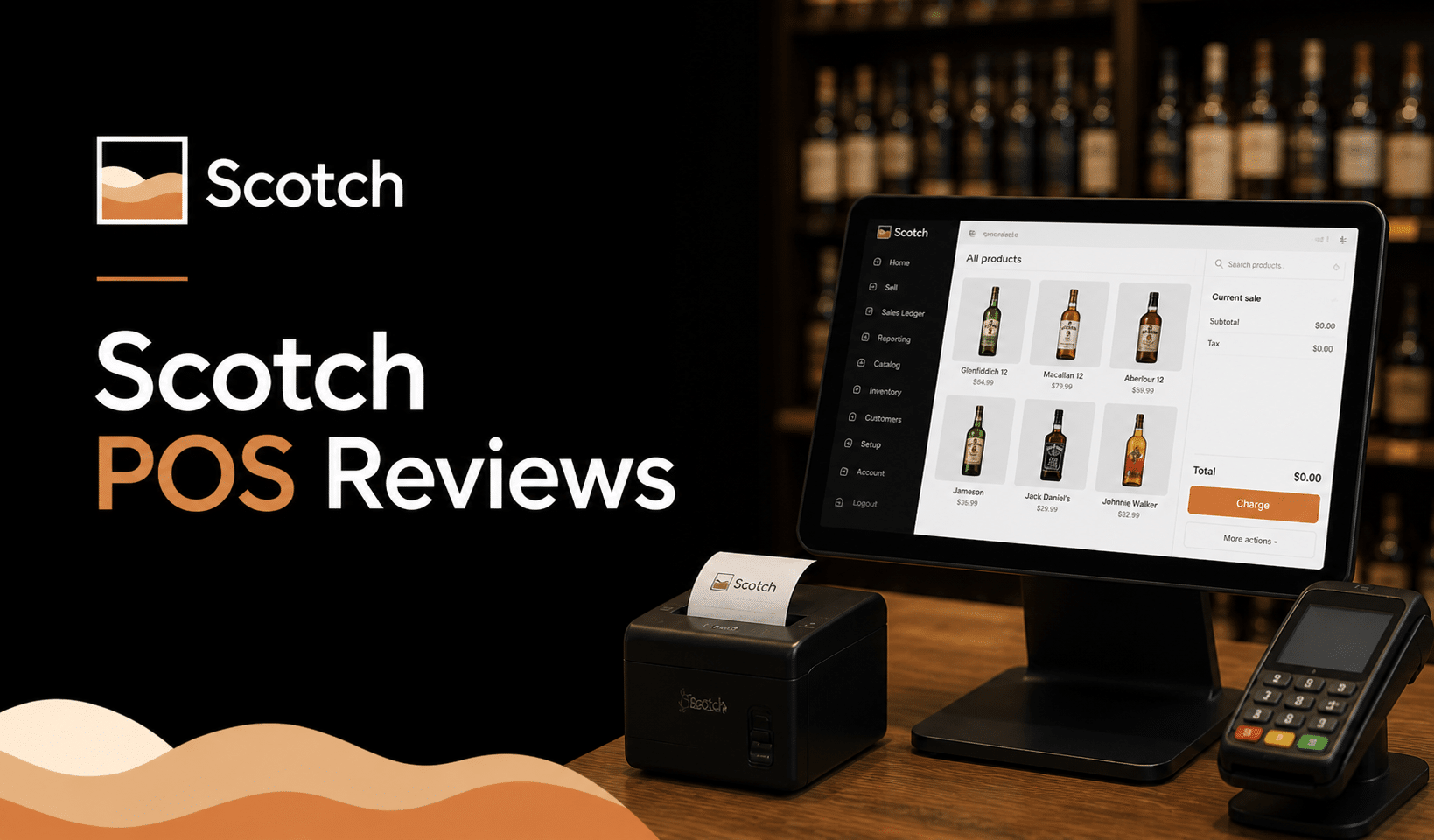
Scotch POS is a liquor-only point of sale platform from a Denver-area startup that put its first store live in 2025 and raised $20 million in June 2026. The software is a solid choice for certain types of liquor stores.
The terms deserve a closer look, particularly the five-year contract and the requirement to run card payments through Scotch.
Below, we break down what Scotch POS costs, what its receiving automation actually does, what its first Trustpilot reviewers report, and which alternatives suit stores that want more flexibility.
Key Takeaways:
- Scotch is built only for liquor retail, and its AI-assisted invoice receiving is the best reason to look at it.
- No pricing is published anywhere, though quotes reportedly start around $99 per month and Capterra lists a $200 flat rate.
- Every plan requires Scotch card processing, so your card volume decides the real cost, not the software fee.
- The contract runs five years, and an early exit means settling what is left owed on the equipment.
What Is Scotch POS?
Scotch is a point of sale and back office system made solely for alcohol retailers, from a Denver-area software company that installed its first customer in 2025.
The company was formally incorporated in January 2024 and operates out of Englewood, Colorado, selling POS software, bundled hardware, payment processing, and an ecommerce module as one package aimed exclusively at bottle shops, package stores, and beverage chains.
Founders Jake Bolling (CEO) and Kevin Hodges (CRO) built Skupos, a convenience store software company that served roughly 15,000 US retailers.
CTO Dan Chen came from alcohol retail itself, with more than a decade in the industry that included a run as CTO of Drizly.
Scotch's founding team pitches a straightforward thesis: America's 40,000-plus independent liquor stores are split across more than 200 regional legacy POS systems, many of them designed 30 to 40 years ago and running on a server in the back room.
Bolling's argument is that a fragmented category is ready for a single vertical platform in place of a patchwork of aging tools.
How New Is Scotch POS in The POS Industry?
Very new, but well-funded. Scotch raised a $10 million seed round led by First Round Capital in September 2024, made public in October 2025, with Lerer Hippeau, Toba Capital, and Watchfire Ventures joining.
A $20 million Series A followed on June 4, 2026, led by VMG Partners alongside the three earlier backers.
At that announcement the company reported year-over-year growth above 500%, more than $1 billion in processed payment volume, and about 45 employees at its Denver headquarters. Its first store went live on the system roughly ten months before that.
Two things follow from those numbers, and both matter to a buyer. The product has enough capital behind it that support and development are unlikely to stall in the near term.
The flip side is that almost nobody has run a full fiscal year on Scotch, so the long tail of edge cases in alcohol retail (seasonal swings, distributor quirks, state license audits) has not been tested at scale yet.
Scotch POS Features
Scotch's feature set is organized around the back office more than the register, and receiving is where it separates itself from general retail systems. Below is what the platform actually does, grouped by the work a store owner handles in a typical week.
AI-Assisted Invoice Receiving
Invoice receiving is where Scotch shines, and the reason most stores take a demo. The system scans paper distributor invoices and matches line items against your catalog using distributor IDs, UPCs, and product descriptions.
In a hands-on evaluation published by TechnologyAdvice in June 2026, the workflow held unmatched products and quantity discrepancies back for review rather than waving them through, which keeps a bad invoice from quietly corrupting stock counts.
For a store taking several deliveries a day, that shifts Monday morning from hours of line-by-line entry to a review queue. Any system can import a clean electronic invoice.
Handling the scanned paper that most distributors still hand over is the harder problem, and the capability to test hardest when you compare retail invoice software.
Margin Protection and Inventory Health Reporting
Scotch flags pricing and margin problems during receiving, before products reach the shelf.
Unusually high or low margins get surfaced as the invoice is processed, which catches keying errors and unannounced distributor price increases at the moment they enter the system.
Back-office dashboards surface dead stock, negative inventory counts, and margin outliers on an ongoing basis. Owners who export to a spreadsheet once a quarter to find slow movers get the same picture continuously.
Alerts only pay off if someone acts on them, because dead stock in retail ties up cash that a liquor store rarely has to spare.
Inventory management a headache?
KORONA POS makes stock control easy. Automate tasks, generate custom reports, and learn how you can start improving your business.
Purchase Orders and Bulk Catalog Editing
Purchase orders can be built from sales history, days-on-hand estimates, and custom report filters, then received directly against the order for tighter reconciliation.
Managers can bulk-edit prices, distributors, and product details across thousands of SKUs inside the platform, with no export and reimport cycle.
Purchase data in that shape gives you leverage to negotiate better vendor terms, since distributor conversations go differently when days-on-hand numbers are in front of you.
Checkout, Age Verification, and Offline Mode
The register handles age verification by scanning a driver's license, applies automatic and manager-approved discounts, and keeps ringing sales when the internet drops.
One important limit applies: offline card processing is not available as of September 2026, so an outage means cash only until the connection returns. Stores in rural areas or older strip malls with unreliable service should weigh that carefully.
Parent-child relationships between cases, packs, and singles are tracked too, so selling one bottle out of a case updates each related unit without a manual adjustment or an end-of-day fix.
Proper case break inventory should behave exactly that way, and plenty of general retail platforms still do not.
Discover Advanced Analytics and Custom Reports
Speak with a product specialist and learn how KORONA POS can work for your business.
Promotions, Loyalty, and Customer Group Pricing
The promotions engine covers mix-and-match pricing, bundle deals, and scheduled promotions that run automatically on chosen days or times.
Loyalty groups can be tied to customer spend thresholds, with exclusive pricing assigned per group, which supports the membership-style discounting larger stores use for wine clubs and case buyers.
Multi-Store and Mobile Access
Multi-location operators can sync inventory and pricing across stores from one account, and Scotch says customers range from single-register shops to stores running more than a dozen lanes.
Sync by itself does not solve multi-store inventory management, which rests on standardized pricing rules and purchasing discipline across sites.
There is no standalone mobile app. The platform is optimized for mobile browsers, so staff can scan products, run counts, and check sales from a phone without a dedicated app.
What Scotch POS Is Missing
Four gaps stand out in Scotch's current lineup, per TechnologyAdvice's evaluation: no built-in email marketing, no payroll integrations, thinner ecommerce integrations than larger retail platforms, and AI demand forecasting sitting on the roadmap instead of in the product.
None of those are disqualifying for a store that just wants inventory under control. All of them bite if you run an active online storefront or a customer email program.
Stores in that camp should map out how ecommerce and POS integration would work here before signing anything.
Scotch POS Pricing and Contract Terms
Scotch publishes no prices. Its pricing page lists six inclusions and one requirement, with no tiers, no rates, and no starting figure anywhere on the site.
Quotes are built per store based on register count, store size, and card volume, which means the only way to learn your price is a sales conversation.
Walk into that call knowing typical POS system costs, or you will have no way to benchmark the number you hear.
What Scotch POS Includes at No Extra Cost
Scotch bundles the items that usually appear as line items on a first invoice: on-site installation, staff training, inventory transfer from your old system, ongoing support, security monitoring, and software upgrades.
Ask what the transfer covers, because historical sales data migration is where vendors differ most, and years of purchase history are painful to rebuild later.
TechnologyAdvice also confirmed no setup, onboarding, migration, or hardware fees, an unusual combination in this market.
Hardware arrives inside the package instead of as a separate purchase, and POS hardware bundles of that scope run well into four figures when bought outright.
Two smaller charges do apply: a $10 fee per chargeback and a modest monthly batching fee on processing. One more thing to plan around: Scotch's Capterra profile lists no free trial, so a guided demo is your only look at the product before a contract.
Why Scotch's Processing Requirement Costs More Than the Monthly Fee
Card volume, not software, is the biggest number on your bill, because Scotch Card Processing is mandatory on all plans. Scotch markets its payments product on a promise of the lowest fees guaranteed, and reviews your current merchant statements to match or beat what you pay now, so nobody signs at a worse rate on day one.
Keep in mind that interchange revenue is part of the business model Scotch described to Crunchbase News, sitting alongside its per-device software fee.
Take that offer seriously only if you can read a merchant statement line by line, since headline rates hide assessments, monthly fees, and downgrades. The question is what happens in year three.
Payment processors giving you trouble?
We won't. KORONA POS is not a payment processor. That means we’ll always find the best payment provider for your business’s needs.
Run the arithmetic on a store doing $150,000 per month in card sales. One quarter of one percent, a difference most owners would not notice on a statement, comes to $375 per month, or $4,500 per year.
Against a software fee somewhere between $99 and $200 per month, the processing spread is the larger figure by a wide margin. And because processing is locked to the software, renegotiating rates later means a conversation with the only processor you are allowed to use.
KORONA POS takes the opposite approach as a processor-agnostic platform, so stores can shop card rates independently of their software and switch processors without replacing the POS.
Several systems let you keep your current processor through an upgrade, which matters most to owners who already fought hard for their rate. Whether that flexibility is worth trading Scotch's receiving automation for depends on your volume.
What the Five-Year Scotch POS Contract Commits You To
What Scotch POS costs over its five-year term
Scotch sells on a five-year contract with its own card processing required, so the software fee is only part of the bill. Five inputs, then the full picture.
| Line item | Per month | Over 60 months |
|---|---|---|
| Software fee | ||
| Card processing | ||
| Hardware and install | $0 |
Excludes the $10 chargeback fee and the monthly batching fee, since both depend on your volume. Hardware, installation, and training carry no upfront charge on Scotch, which is why the equipment cost shows up only if you leave early. Pricing reflects reported figures as of September 2026. Planning estimate, not a quote.
Scotch operates on a five-year contract, according to TechnologyAdvice's June 2026 reporting, and retailers who cancel early are responsible for the remaining balance on their bundled hardware.
Both facts deserve attention, because free hardware and a long term are two sides of the same arrangement. The equipment is not a gift. Its cost is amortized across the contract, and leaving early accelerates what is left.
For a single-register shop, that exposure is manageable. For a six-lane store with customer displays, scanners, and label printers at each station, the unamortized balance in year two could reach a few thousand dollars.
Multiple competitors in this category sell month-to-month, so a five-year commitment is a meaningful differentiator and belongs in your comparison notes. Long-term contracts usually travel with POS early termination fees, so price the exit before you price the software.
Before signing, get four things in writing: the exact term start date, the itemized hardware valuation, the early termination formula, and what happens to your processing rate at renewal.
Scotch POS Reviews: What Users Actually Say
Scotch holds a 3.9 out of 5 rating on Trustpilot from three reviews, all posted between July and August 2026 and unchanged as of September 8, 2026. Two are five-star and one is four-star.
The company claimed its Trustpilot profile in March 2026, and Trustpilot notes that Scotch has no recent history of inviting customers to review, adding that the sample may not represent the customer base. All three reviews are labeled unprompted.
Three data points is not a track record. What they do offer is early signal, and the themes are consistent:
- Support responsiveness. Reviewers describe quick issue resolution and an engaged team, with one operator noting that Scotch actively takes user suggestions into product improvements.
- Stability and ease of operation. A July reviewer sums the system up as stable and simple to operate, which is faint praise on paper and meaningful at a register.
- Communication about changes. The one four-star review asks for advance notice before updates go live, so stores can prepare and avoid discovering changes at the register.
Scotch POS on Other Review Sites
Coverage elsewhere is thin. Scotch's Capterra profile, last verified in March 2026, shows zero user reviews, and its GetApp and Software Advice listings carry product descriptions with no ratings attached.
Scotch's own site runs one video testimonial, from the general manager of Cheers Fine Wine & Spirits in Carrollton, Georgia, and promises stores will spend 20% less time on work they dislike.
The June 2026 funding release named four larger retailers it had signed: The Liquor Store of Jackson Hole, Big Bear Wine & Liquor, Corkdorks, and Everest Spirits Superstore. Vendor material like that is useful for identifying reference stores and useless for verification.
Questions to Ask a Scotch POS Reference Store
With no meaningful third-party review volume, reference calls are your real diligence. Ask Scotch to connect you with a store that matches your size and state, then work through these:
- How long did migration take, and how much of your inventory data arrived clean?
- What broke in the first 60 days, and how fast did support fix it?
- How accurate is invoice matching with your specific distributors?
- Did your effective processing rate change after the first few statements?
- What have you asked for that Scotch has not built yet?
- Knowing the contract length, would you sign again?
Ask for a store that has been live at least a year. Given Scotch's timeline, that request alone tells you something.
Scotch POS Pros and Cons
Scotch earns high marks on liquor-specific automation and loses them on commitment terms. TechnologyAdvice scored it 4.32 out of 5 overall, with a user reviews sub-score of 3.44 that reflects absent feedback, not complaints.
Pros
- Made for alcohol retail alone, so case breaks, ID scanning, and distributor workflows come native, not retrofitted
- Invoice receiving automation that handles scanned paper and flags discrepancies for review
- Margin alerts during receiving, plus dead stock and negative inventory reporting
- Hardware, installation, training, and data migration bundled with no upfront fees
- Multi-store inventory and pricing sync from one account
- Deep promotions engine with bundles, scheduled offers, and customer group pricing
Cons
- Five-year contract, with the remaining hardware balance owed on early exit
- Mandatory Scotch Card Processing, so card rates cannot be shopped separately
- No offline card processing, which limits stores with unreliable internet
- Email campaigns and payroll both need outside tools
- Ecommerce integrations trail larger retail platforms
- Three Trustpilot reviews and a company barely two years old, so operational history is short
Is Scotch POS Right for Your Liquor Store?
Scotch fits stores whose biggest daily bottleneck is receiving, and fits poorly where flexibility matters more than automation.
Who Should Choose Scotch POS
Two profiles get the most out of what Scotch does well:
- You are drowning in distributor invoices. High-volume stores taking multiple deliveries daily, especially those with an owner or GM doing data entry personally, get the clearest return from the receiving workflow.
- You are opening a store or replacing everything at once. Bundled hardware, on-site installation, and no migration fees remove a chunk of upfront capital expense, which is a genuine advantage when you are buying terminals anyway.
Who Should Avoid Scotch POS
Four situations point toward a different system:
- You already negotiated good card rates. Handing processing to a required provider forfeits the leverage you built, and the spread outweighs any software savings at volume.
- You need cards to work during an outage. Until offline processing ships, an internet failure means cash only.
- A five-year term is a non-starter. Rival systems will sign you monthly, and a long commitment limits your options if the product stalls or your plans change.
- Ecommerce or email marketing drives your growth. Both are current weak spots, so a store leaning on online sales or campaign-driven revenue will be adding third-party tools.
Scotch POS Alternatives
The leading Scotch POS alternatives are KORONA POS, Bottle POS, mPower Beverage, and Lightspeed Retail, and each stands apart from Scotch on a different axis: processing freedom, review history, category tenure, or high-end retail depth. For a wider field, our ranking of the best liquor store POS systems covers ten.
KORONA POS: Best for Processor Flexibility
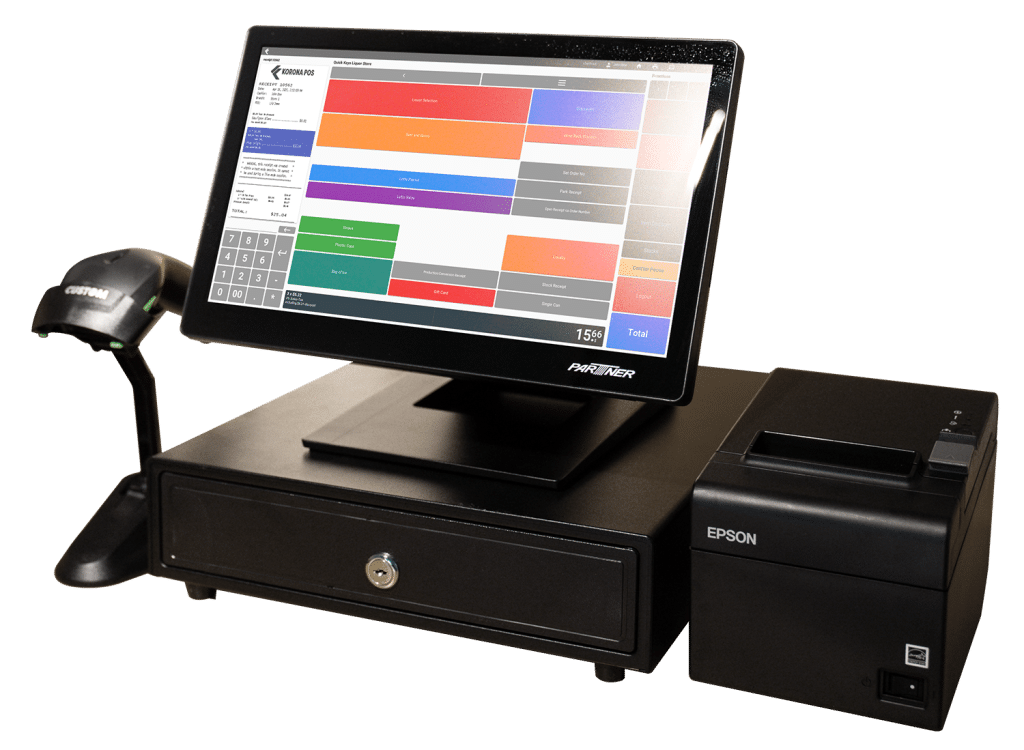
KORONA POS differs from Scotch on payment freedom. The platform is processor-agnostic, so you pick and renegotiate your card processor independently of the software, and its pricing sits on a public page.
There are no long-term contracts either, so the equipment payoff clause never applies. Liquor tools include case-break inventory, automatic reorder points, built-in age verification prompts, and ABC analysis for ranking movers against dead weight, with API access and third-party integrations on the Plus plan.
Pricing: Core at $59 per month per terminal, Retail at $79, Plus at $99, and custom Enterprise pricing, all listed publicly. Unlimited free trial with no card required, plus a 60-day money-back guarantee on software.
Ideal for: High-volume and multi-location stores that want liquor-specific inventory depth without processor lock-in or a multi-year term.
Bottle POS: Best for a Proven Review Record
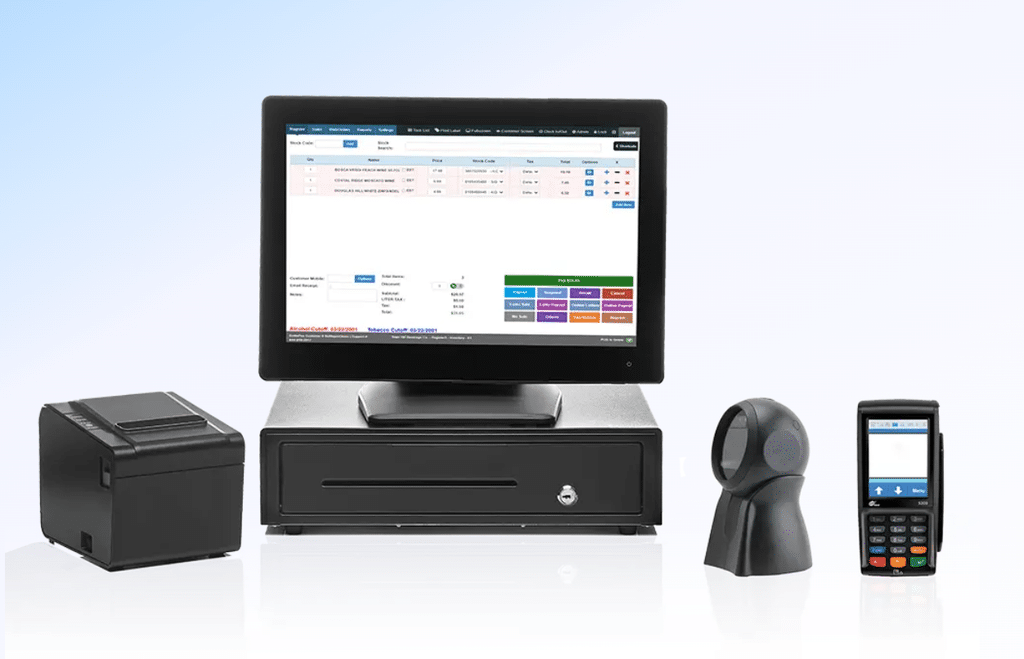
Bottle POS pulls ahead of Scotch on track record. It carries a 4.6 rating from 665 Trustpilot reviews as of September 2026, the feedback volume Scotch has not had time to accumulate.
It also ships with a prebuilt database of more than 20,000 liquor SKUs, cutting setup time sharply. Our full Bottle POS review covers where that head start stops helping.
The tradeoff mirrors Scotch: Bottle POS requires its own payment processing, though it offers interchange-plus, flat rate, and dual pricing options instead of one fixed model.
Pricing: Starter at $59 per month, rising to about $99 for Premium, which adds multi-site transfers and SMS marketing. Automated invoice importing is a $40 monthly add-on. No long-term contracts.
Ideal for: Independent stores that want liquor-native features backed by a long, verifiable feedback record.
mPower Beverage: Best for Multi-Store Tenure
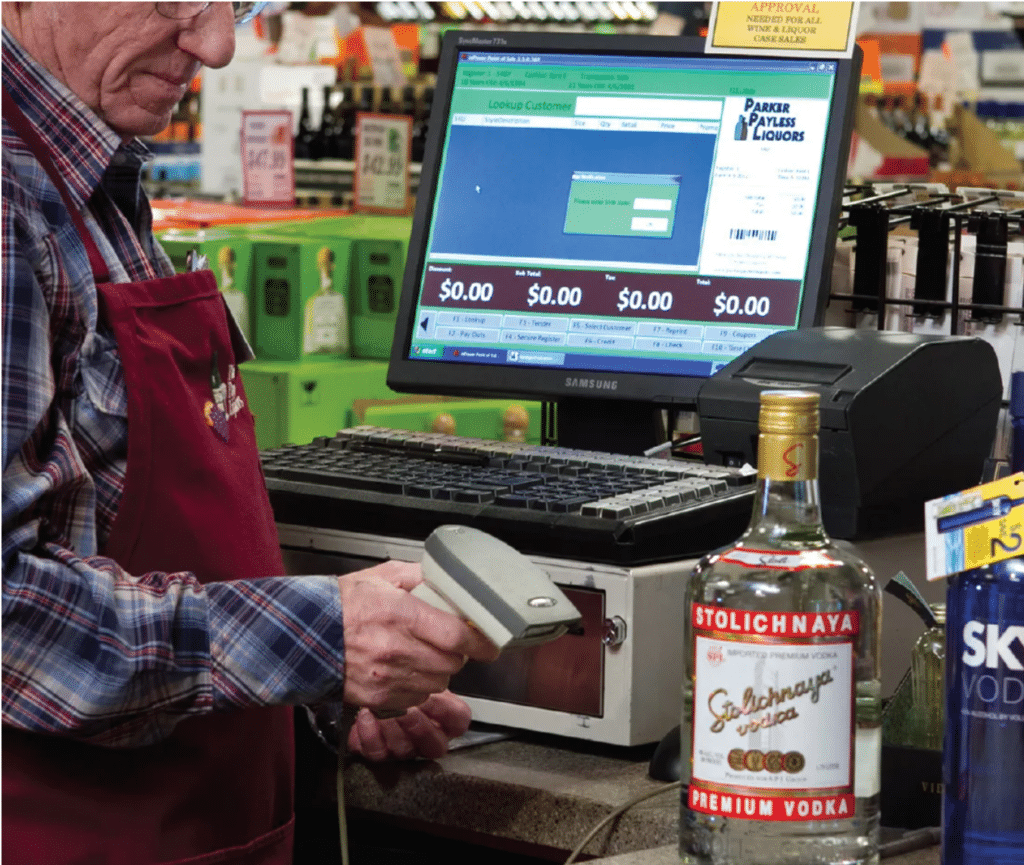
mPower Beverage's edge over Scotch is time in the category. Built in Dallas and shipping since 2009, it sells against Scotch explicitly on tenure, claiming fifteen-plus years of inter-store transfers, consolidated purchasing, and location-level pricing across stores in 46 states and DC.
It offers a choice among three integrated processing partners, not one mandatory processor, and it stays independently owned while Scotch answers to venture backers, a difference some owners weigh when judging roadmap incentives. Over 70 standard reports ship with the system.
Pricing: mPower stopped publishing a rate card in 2026. Third-party listings put it at $1,000 upfront plus $120 per month for one register, with each additional register adding $250 upfront and $120 monthly. No free trial.
Ideal for: Established multi-store beverage retailers who value years of solved edge cases over a modern interface.
Lightspeed Retail: Best for Upscale Wine Retail
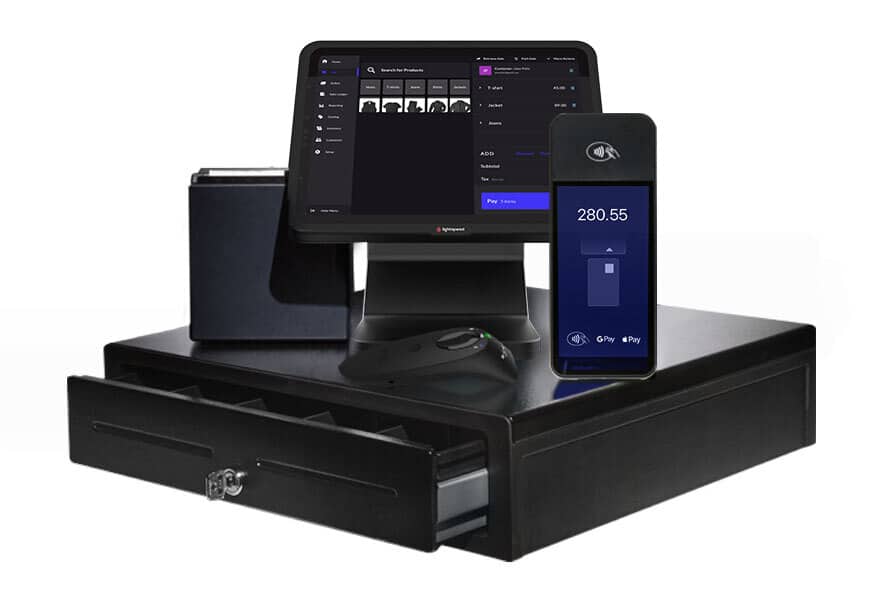
Lightspeed Retail covers far more ground than Scotch. It is a general retail platform whose omnichannel and CRM tooling leads the four here, reversing Scotch's weakest area.
Item matrix handling for vintages and bottle sizes, automated reordering, and marketing automation on upper tiers suit high-end wine retail.
Our Lightspeed POS review digs into the tradeoffs behind those tiers. The cost is liquor specificity: compliance and receiving workflows are less native, phone support starts on the top tier, and offline capability is more limited than Scotch's.
Pricing: Basic at $109 per month, Core at $179, Plus at $339. Annual billing drops those to $89, $149, and $289. Bringing an outside processor triggers an extra monthly fee that Lightspeed does not publish.
Ideal for: Upscale wine and spirits shops where online sales, customer marketing, and catalog presentation drive revenue.
Final Verdict on Scotch POS
Scotch has built the sharpest receiving workflow in liquor retail, and any store losing hours to distributor paperwork will feel the difference inside a week.
The software is not the open question. The commitment is. Sixty months is a long stretch to hand one vendor your register and your card rates together, especially at a company that turned two this year and has three published reviews to its name.
Treat the demo as the start of your diligence, not the end of it. Price the processing across the full term, get the cancellation formula and the hardware valuation in writing, and call a store your size that has run Scotch through a full year of seasons.
If those answers hold up, buy with confidence. If the sales team turns vague on any of them, you have learned what you needed to know.
Frequently Asked Questions
How Much Does Scotch POS Cost?
No public rate card exists. Pricing is quoted store by store, with a reported entry point near $99 monthly, while the vendor's Capterra profile cites $200 flat. Installation, training, and equipment add nothing upfront, and using Scotch for card payments is compulsory.
Does Scotch POS Require You to Use Its Payment Processing?
Yes, without exception. Card payments must run through Scotch Card Processing, which rules out changing providers down the road. Scotch will study your existing statements and promise to equal or undercut what you pay today, but discloses no rates behind that promise.
How Long Is the Scotch POS Contract?
Five years, per TechnologyAdvice's June 2026 reporting. Walk away sooner and the unpaid portion of your bundled equipment comes due. Ask the sales rep to document the term, how the equipment is valued, and exactly how cancellation gets calculated.
Is Scotch POS Good for Liquor Stores?
Yes, especially for busy shops where supplier paperwork piles up daily. Case-break tracking, margin alerts, and automated receiving were designed for alcohol retail from the start. Weigh that against the term length, processor lock-in, and thin operating history.
Does Scotch POS Work Offline?
Partially. The register keeps ringing sales through an outage and uploads them once service comes back. Cards cannot be taken offline yet, which rules Scotch out for shops where the connection drops often or the wiring is old.
What Are the Best Scotch POS Alternatives?
KORONA POS, Bottle POS, mPower Beverage, and Lightspeed Retail. KORONA fits owners who refuse processor lock-in and multi-year terms, Bottle POS carries years of accumulated user feedback, mPower knows beverage retail deeply, and Lightspeed serves upscale omnichannel sellers.