


The cost to open a bakery typically ranges from $20,000 to $100,000. That range is wide because no two bakeries are the same. Location, equipment, staffing, permits, and marketing all affect your final number.
In this guide, you’ll find a full breakdown of every major startup expense, a step-by-step budgeting process, and practical tips to keep costs under control before you open your doors.
Key Takeaways:
- Opening a bakery costs between $20,000 and $100,000, with location, equipment, and renovations being the biggest cost drivers.
- A realistic budget separates one-time startup costs from monthly recurring expenses, and always includes a 10–20% contingency buffer.
- The right technology (a bakery POS, inventory system, and payroll software) reduces operational errors and protects your profit margins from day one.
What Is The Average Cost To Open A Bakery?
Most bakeries open with a budget between $20,000 and $100,000. The cost to open a bakery varies widely, and the right number for you depends on your business model, location, and how much you’re starting from scratch.
A home-based bakery sits at the lower end, often under $10,000. A fully stocked storefront with equipment, renovations, staffing, and marketing can easily exceed $75,000. Factor in rent, permits, inventory, technology, and a contingency buffer, and your actual number will become much clearer.
How to Calculate Your Bakery Startup Budget (Step-by-Step Guide)
Before spending a dollar, you need a clear picture of every cost involved. Follow these steps to build a realistic budget for your bakery:
Step 1: Define Your Bakery Type
Decide whether you’re opening a home bakery, a retail storefront, or a full-scale production bakery. Each type carries a very different cost range, from under $10,000 for home setups to over $100,000 for retail locations.
Step 2: Research Your Local Real Estate Market
Get at least three rental quotes in your target area. Monthly rent for a small bakery space typically runs between $1,500 and $10,000, depending on city, neighborhood, and square footage.
Step 3: List All Required Equipment
Write down every piece of equipment you need: commercial ovens, mixers, proofing cabinets, display cases, and refrigeration units. New commercial equipment costs between $20,000 and $50,000. Used equipment can significantly cut that figure.
Step 4: Estimate Build-Out and Renovation Costs
Factor in plumbing, ventilation, electrical upgrades, and flooring. Light renovations average $5,000 to $15,000. Full gut renovations can exceed $50,000, especially when adding hood systems or walk-in coolers.
Step 5: Calculate Licensing and Permit Fees
Budget for a business license, food handler permits, a health department inspection, and a food establishment permit. Fees range from $500 to $3,000, depending on your state and county.
Step 6: Estimate Your Initial Inventory and Ingredient Costs
Calculate the cost of your first one to two months of ingredients: flour, butter, sugar, eggs, and specialty items. A realistic starting inventory budget falls between $2,000 and $8,000.
Step 7: Budget for Staffing Costs
Include wages, payroll taxes, and any training costs. For a small crew of 2 to 4 employees, plan for $5,000 to $15,000 in labor costs in the first month.
Step 8: Account for Technology and POS Systems
A reliable point of sale system, online ordering software, and accounting tools are non-negotiable. Monthly software costs typically range from $50 to $300, with upfront hardware costs of $500 to $2,000.
Step 9: Set Aside a Cash Reserve
Most bakeries take three to six months to turn a profit. Keep a reserve of at least two to three months of operating expenses to cover shortfalls without taking on emergency debt.
Step 10: Add It All Up and Add a 10–15% Buffer
Sum every cost category. Then add 10-15% on top as a contingency for unexpected expenses. Surprises are common in any build-out or new business launch.
Breakdown of Bakery Startup Expenses
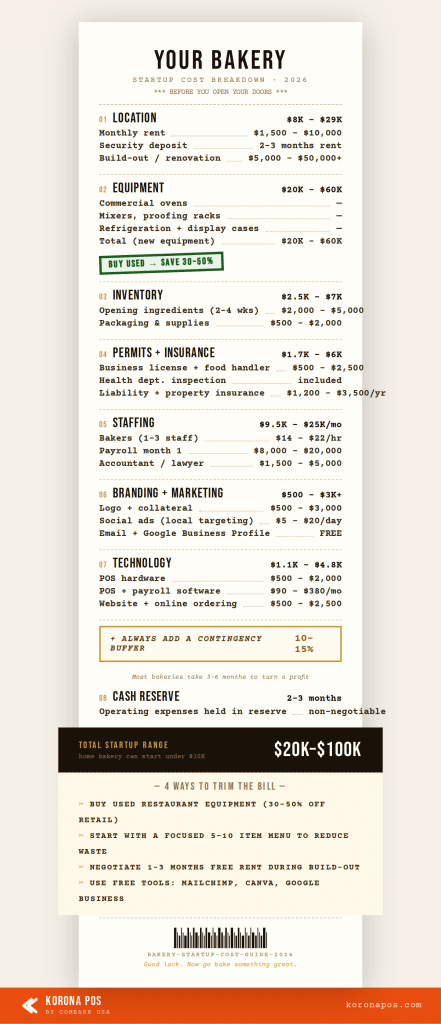
Knowing where your money goes before you open is half the battle. Here’s a clear breakdown of every major cost category you’ll need to plan for when running a bakery.
Location
Your location determines your foot traffic, your customer base, and a significant portion of your monthly overhead. Get it right from the start.
Rent
Expect to pay between $1,500 and $10,000 per month. High-traffic urban spots cost more but bring built-in visibility. Suburban or secondary locations offer lower rent with slower initial customer growth. Your city, neighborhood, and square footage will set the final number.
Security Deposit
Most commercial landlords require two to three months’ rent upfront as a security deposit. On a $3,000/month lease, that’s $6,000 to $9,000 due before you even open. Budget for it early so it doesn’t catch you off guard.
Renovation and Build-Out
Few commercial spaces come ready for a bakery. You may need ventilation upgrades, plumbing work, grease trap installation, or flooring changes. Costs range from $5,000 for light cosmetic work to over $50,000 for a full kitchen build-out.
Paperwork
Licenses and permits are non-negotiable. Skipping or delaying them can result in fines, failed inspections, or forced closure before you even serve your first customer.
Registration
You’ll need a business license, a food establishment permit, a food handler’s certification, and potentially a zoning or occupancy permit. Total costs vary by state and city but typically range from $500 to $2,500. Check with your local health department early in the process.
Insurance
At minimum, you need general liability insurance and commercial property insurance. Most bakeries pay between $1,200 and $3,500 per year. Coverage level, location, and business size all affect the final premium. If you hire staff, workers’ compensation insurance is also required in most states.
Equipment, Ingredients, & Inventory
Equipment is often the largest single upfront cost for a bakery. Plan carefully, prioritize what you actually need on day one, and avoid over-buying early.
Equipment Costs
A basic commercial setup includes ovens, mixers, proofing racks, refrigeration units, and display cases. New equipment can run $20,000 to $60,000 or more. Buying quality used equipment from restaurant liquidators can cut that cost by 30 to 50 percent.
Ingredients
Your opening ingredient order needs to cover at least two to four weeks of production. Flour, butter, eggs, sugar, and specialty items add up fast. A small bakery can expect to spend $2,000 to $5,000 on the initial ingredient stock alone.
Inventory Costs
Beyond ingredients, budget for packaging supplies: boxes, bags, labels, tissue paper, and to-go containers. These costs are easy to underestimate. A realistic starting inventory budget for packaging and consumables ranges from $500 to $2,000 based on your product range.
Staffing and Management
Labor is one of your biggest ongoing costs. Before opening day, you need to know exactly who you’re hiring, what you’re paying them, and what professional support you need.
Bakery Staff
A small bakery typically needs one to three bakers, a front-of-house cashier, and possibly a delivery person. Hourly wages range from $14 to $22 based on experience and location. Payroll can easily run $8,000 to $20,000 per month once you factor in taxes and benefits.
Professional Services
Budget for an accountant, at minimum. Many new bakery owners also work with a business attorney during setup for lease review and entity formation. Expect to spend $1,500 to $5,000 on professional services in your first year, more if legal issues arise.
Branding and Marketing
Customers won’t find you if they don’t know you exist. A proper marketing budget isn’t optional. It’s one of the most important investments you make before and during your opening.
Marketing Collateral Development
Before you open, you need a logo, a color palette, packaging design, and printed menus or signage. Working with a freelance designer typically costs $500 to $3,000. A strong visual identity builds credibility and makes your bakery look professional from day one.
Social Media Marketing
Set up business profiles on Instagram and Facebook before opening. Paid ads targeting your local area can cost as little as $5 to $20 per day.
PRO TIP!
Organic content, including photos of your products and behind-the-scenes baking, builds an audience at no cost beyond your time.
Email Marketing
Build an email list from day one using a sign-up form at the counter or on your website. Platforms like Mailchimp offer free plans for lists under 500 contacts. A monthly newsletter with promotions, seasonal specials, and new product announcements keeps customers coming back.
Technology
The right tech stack saves time, reduces errors, and helps you stay profitable. Investing in the right tools from the start is far cheaper than fixing operational problems later.
Inventory Management System
A dedicated bakery inventory management system helps you track ingredient usage, reduce waste, and reorder supplies before you run out. Without one, it’s easy to over-purchase perishables or run short during a busy weekend rush. Most SaaS-based solutions run $50 to $150 per month.
Inventory management a headache?
KORONA POS makes stock control easy. Automate tasks, generate custom reports, and learn how you can start improving your business.
Payroll System
Payroll software automates tax calculations, pay stubs, and direct deposits. Options like Gusto or ADP start around $40 to $80 per month for small teams. Getting payroll wrong is costly, both financially and in terms of staff morale.
POS System
A bakery POS system handles sales, tracks top-selling items, manages customer data, and integrates with your inventory. Look for one built with food service in mind. Check out the key POS features that matter most for bakeries before committing to a platform.
Website (for Online Orders)
A basic website with online ordering can be built for $500 to $2,500, depending on complexity. Platforms like Square Online or Wix offer lower-cost starter options. Offering pre-orders and custom cake requests online reduces phone traffic and increases average order value.
Tips to Reduce Costs While Opening a Bakery
Opening a bakery doesn’t have to drain your savings. A few smart decisions early on can meaningfully lower your startup costs without cutting corners on quality.
Buy Used Equipment First
New commercial equipment is expensive. Restaurant liquidation sales, auction sites like BidSpotter, and local classifieds often have quality ovens, mixers, and refrigeration units at 30 to 50 percent of retail price. Inspect everything before you buy and factor in any repair costs.
Start With a Focused Menu
A smaller menu means fewer ingredients, less equipment, and simpler inventory. Start with your five to ten best-selling products and expand once revenue is steady.
PRO TIP!
Trying to offer everything on day one inflates your costs and significantly increases waste.
Negotiate Your Lease Before You Sign
Many landlords will offer one to three months of free or reduced rent during a build-out period. Ask for it. Also, negotiate a shorter initial lease term with renewal options, so you’re not locked into a long commitment before you know the location works.
Use Free and Low-Cost Tech Tools
Paid software adds up fast. Start with free tiers on tools like Mailchimp for email, Google Business Profile for local search visibility, and Canva for basic marketing materials. Upgrade only when your revenue justifies the added expense.
Track Your Bakery Income With KORONA POS
KORONA POS is built for bakeries. It handles order modifiers, multiple print stations, check-splitting, and item transfers with ease. From a reporting standpoint, you get average customer spend, conversion rates, product return rates, and year-over-year reports, and many more.
Plus, we also offer a 24/7 in-house emergency customer support team to make sure your system is always up and running. KORONA POS also supports dual-pricing and works with any payment processor, so you’re never locked in.
Start your free trial, book a demo, or call us at 833-200-0213.
FAQs: How Much Does It Cost To Open A Bakery
1. What mistakes do startup bakeries make?
Many startup bakeries make the mistake of producing too many product types. Creating a menu that caters to the target clientele and investing in marketing will ensure that your bakery is successful from the start.
2. How long would it take to open a bakery?
Bakeries that are already outfitted with cooking equipment can be opened in a couple of weeks. However, other bakeries require gut renovations with the installation of new walk-in refrigerators and industrial ovens. These types of bakeries can take months to open.