


Smart floor layouts, strategic product placement, and consistent execution drive customer traffic and boost sales.
Whether you run one location or multiple stores, retail merchandising tips work.
The strategies ahead show you exactly how to optimize your space, eliminate costly mistakes, and grow revenue through proven merchandising practices.
Key Takeaways:
- Let data guide your decisions. Stop relying on intuition and check your sales reports to see which products actually move.
- Keep your stores consistent. Multi-location retailers must standardize everything from shelf layouts to signage to pricing.
- Maintain clean, organized displays. Cluttered shelves and dusty products push customers away.
- Simplify with a strong system. Use your POS system to track inventory, monitor product performance, and manage consistency across locations.
What Is Retail Merchandising?
The term refers to the overall strategy businesses use to increase sales. This blanket term refers to all promotional strategies, product placement, store layout, retail design and decoration, and pricing.
Merchandising can range from many-minute changes around your store to big-picture strategies.
Most businesses, whether they know it or not, are already using a merchandising strategy. But it will help to make a more intentional and cohesive effort.
So, to get started we need to consider what goes into a successful merchandising technique and how retailers can track the data to make the best changes for their stores
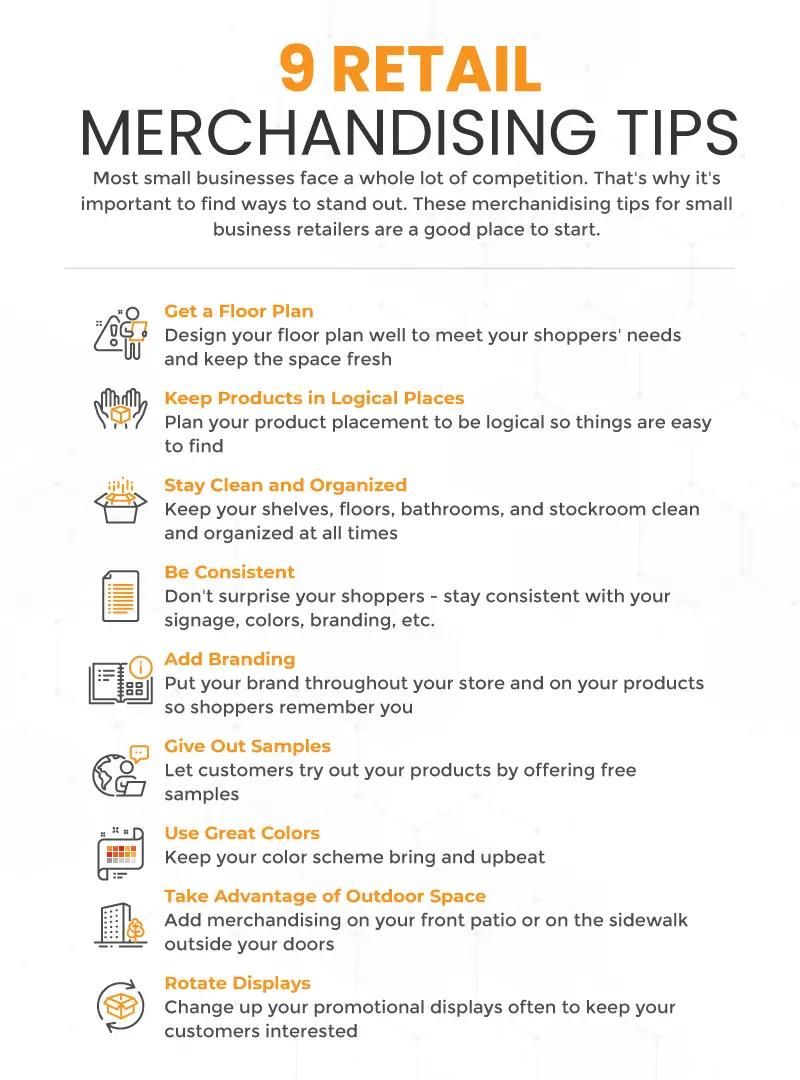
1. Optimize Your Retail Floor Plan
An effective floor plan maximizes your space while guiding customers naturally through your store. Most shoppers instinctively turn right upon entering, so place high-margin or seasonal items in that zone. Keep your aisles wide enough to prevent that cramped feeling, but narrow enough to make every square inch count.
Store aisles and traffic patterns matter more than you might think. Strategic placement of popular items draws customers deeper into the store, increasing their exposure to other products.
Keep extra inventory in back storage so your displays never look overstocked. Eye-level shelving should feature your best-margin products since these spots command premium visual attention.
Example
A grocery store places premium cheese and organic products at eye level in the dairy section, while standard items sit lower. High-traffic zones near the entrance feature seasonal produce and impulse buys.
PRO TIP
Map customer flow with your inventory management system to track which zones convert best.
2. Be Logical with Product Placement and Shelving
Customers want to find what they need quickly. Intuitive product placement respects their time while allowing browsing opportunities. Group related items together so customers naturally discover complementary products. Clear signage and simple layout reduce friction and improve the shopping experience.
Cross-merchandising works best when products share a logical connection. Place salsa next to tortilla chips, hair conditioner beside shampoo, or holiday decorations near gift wrap. Signs should use consistent fonts and colors to reinforce your brand while helping shoppers navigate without confusion.
Example
A home improvement store arranges paint, brushes, and rollers on the same aisle end cap. A beauty retailer positions skincare products by concern rather than brand, making it easier for shoppers to solve their specific problems.
PRO TIP
Use color-coded shelf labels by category so new customers find items without asking staff.
3. Keep Things Clean and Organized
Cleanliness signals competence. A cluttered, dusty store sends customers to competitors regardless of your prices or selection. Daily maintenance tasks keep shelves facing fresh and floors spotless. Your entrance and exit make the strongest impression, so these areas deserve special attention throughout the day.
Frequent product rotation keeps displays neat and shows items to their best advantage. Return misplaced items to their proper shelves immediately, and dust regularly. Schedule daily walk-throughs during peak hours to address issues before customers notice them. A well-maintained store encourages longer shopping sessions.
Example
A clothing retailer folds all items consistently and straightens displays every two hours. A convenience store cleans its entrance before opening and again at lunchtime.
PRO TIP
Create a checklist that staff complete before opening, at midday, and at close.
4. Stay Consistent
Consistency builds trust. When customers visit your store, they should experience the same layout, pricing approach, and service standards every time. Business managing multiple stores should ensure locations feel identical so regular customers never feel lost or confused.
Apply consistency across every detail. Price labels should look the same, promotional signage should match, and point-of-sale systems should operate identically across all locations.
Even how you fold clothes or arrange displays should follow a single standard. Consistent branding and color schemes reinforce recognition and create a polished impression.
Example
A small chain maintains identical return policies at every location, uses the same POS software across all stores, and displays merchandise using the same color-coded system. Their website merchandising mirrors in-store layouts.
PRO TIP
Document your merchandising standards in a visual guide so all staff follow the same approach.
5. Add Branding to Areas Around Your Store
Strong branding makes your store memorable. Visible brand identity at the storefront, throughout aisles, and near checkout reinforces recognition. Customers should instantly know they’re in your store. Branded takeaways, like shopping bags or business cards, extend your presence beyond the purchase.
Strategic brand placement drives recognition without feeling forced. Your logo should appear prominently at entry points and checkout areas.
Color consistency across signage, displays, and staff uniforms creates visual coherence. Small branded items encourage customers to share your brand with friends and family.
Example
A local bakery places its logo above the entrance, on all price tags, and on shopping bags. Staff wear branded aprons. Customers often leave with a bag that advertises the business throughout their day.
PRO TIP
Make your storefront visible from across the street with clear signage and distinct colors.
LEARN MORE
Explore retail marketing strategies that integrate your physical and digital presence.
6. Offer Samples or Freebies
Samples eliminate purchase risk. Customers try before they buy, which converts skeptics into buyers. People bond with products they’ve personally experienced.
Different retail sectors benefit from different sampling approaches. Liquor stores invite brand reps for beer and wine tastings. Beauty retailers set up testers for perfume or lotion.
Convenience stores offer snack samples. Food retailers might demo a new product line. Samples create a reason for customers to stop, engage, and spend more time in your store, all advantages for your business.
Beyond conversion, samples generate foot traffic and create memorable shopping moments. They’re especially powerful for new or unfamiliar products that customers would normally skip. A single positive sample experience can turn an uncertain buyer into a loyal customer.
PRO TIP
Time samples strategically, late afternoon or weekend foot traffic maximizes the audience. Focus on products with healthy profit margins so the sampling investment pays off.
7. Use the Right Colors
Different colors trigger different responses: blue creates calm and trust, green suggests freshness and health, yellow energizes and grabs attention, purple conveys luxury, pink evokes warmth and approachability, and white signals cleanliness and minimalism.
Your color palette should align with your brand identity and the feelings you want customers to experience.
Remember that different types of customers in retail respond to various visual cues. An impulsive shopper might be drawn to bright red “Sale” signs, while a luxury seeker might prefer a minimalist palette of black and gold.
Use bold colors to draw eyes to specific focal points or clearance sections, so they don’t get missed.
PRO TIP
Test different color schemes in one department before rolling out store-wide. Track sales performance to see which colors actually move product for you.
8. Add Retail Merchandising Outside
Exterior merchandising draws passersby into your store. Your front facade is advertising space that operates 24/7. Appealing window displays, clear signage, and strategic outdoor displays increase foot traffic and build brand awareness before customers step inside.
Create compelling window displays that change with the seasons and showcase your most eye-catching products. A creative sidewalk sign with humor or clever messaging stops browsers in their tracks and brings them inside. Good lighting highlights your facade at night.
Keep doors open on pleasant days to welcome shoppers. Small displays of merchandise outside the entrance give customers a preview of what’s available.
Example
A garden store places blooming plants outside to attract customers and hint at the selection inside. A restaurant uses a chalkboard sign with daily specials that draws foot traffic from the sidewalk.
PRO TIP
Update your window display monthly to give regular passersby a reason to look again.
9. Rotate Through Displays
Fresh displays keep regular customers engaged and signal that your store is current and dynamic. Seasonal rotation showcases different inventory, teaches you what sells best, and creates urgency around limited-time items. Quarterly display changes prevent your store from feeling stale.
Analyze display performance by tracking which products sell fastest. Featured items are usually discounted, so measure profit against volume to understand true productivity.
Quick adjustments based on sales data ensure you feature high-performing categories. Track metrics using your inventory system to identify trends and optimize future displays.
Example
A clothing store features winter coats prominently in October and November, then switches to lightweight layers in March and April. Sales data shows which displays drove the most revenue, informing next season’s strategy.
PRO TIP
Photograph each display before moving on. Over time, you’ll build a reference library of successful layouts that worked with your specific customer base.
10. Leverage Technology to Support Smart Merchandising Decisions
Modern POS systems and inventory management tools transform merchandising from guesswork into a data-driven strategy. Technology amplifies every tactic you’ve implemented.
Your point of sale software tracks which products move fastest, which sit idle, and which generate the highest profit per transaction. Inventory reports reveal stock levels at a glance, preventing overstock situations that clutter your selling floor.
Inventory management a headache?
KORONA POS makes stock control easy. Automate tasks, generate custom reports, and learn how you can start improving your business.
Barcode scanning and price adjustments happen instantly across your store or multiple locations, supporting the consistency strategy. Customer purchase histories show patterns that inform your product assortment and merchandising calendar.
Some retailers even use simple heat maps to see which store sections receive the most foot traffic. These insights guide floor plan adjustments and future layout decisions.
PRO TIP
Review your top 20-30 SKUs monthly. Feature them prominently and consider bundling them with slower-moving items to boost overall sales.
Common Merchandising Mistakes to Avoid
Many store owners unknowingly sabotage sales through poor display choices, inconsistent pricing, and weak inventory management across locations. Here are some common merchandising mistakes to avoid:
Ignoring Local Demand Patterns
Every store location possesses a unique customer profile. Stocking identical inventory across all branches ignores regional preferences and seasonal shifts.
Successful owners master assortment planning in retail to tailor selections. Customizing your product mix ensures each shop meets the specific needs of its neighborhood.
Neglecting Strategic Store Management
Poorly trained staff can ruin even the best merchandising strategy. If employees fail to maintain displays or follow layout guides, sales suffer.
Learning how to manage a retail store effectively involves creating clear SOPs. Consistent oversight ensures that your visual standards remain high across every single storefront.
Overcrowding the Sales Floor
Cluttered aisles overwhelm visitors and hide high-margin products. Some retailers mistakenly believe more stock on the floor equals more sales. Instead, focus on breathable layouts. Effectively managing surplus inventory in a retail store keeps the sales floor pristine while keeping backstock organized for quick replenishment.
Disregarding Performance Data
Gut feelings often lead to poor buying decisions. Many owners fail to review which displays actually convert visitors into buyers. Utilizing retail sales analytics provides a factual roadmap for future merchandising. Data reveals exactly which products deserve prime real estate and which should be moved to clearance.
Discover Advanced Analytics and Custom Reports
Speak with a product specialist and learn how KORONA POS can work for your business.
Lax Financial and Operational Discipline
Visuals matter, but operational gaps at the point of sale create friction. Inconsistent pricing or messy checkout areas frustrate customers during the final stage of their journey. Tightening your cash handling procedures in retail ensures accuracy and professionalism. A secure, organized register area reinforces brand trust and encourages repeat visits.
Simplify Your Store Management Using KORONA POS
KORONA POS simplifies operations for liquor stores, bakeries, and specialty retailers through robust sales analytics. Owners gain clear insights into product performance across all locations. The software remains processing agnostic and supports dual pricing to help manage costs effectively.
Whether you run a smoke shop or an admissions desk, these tools streamline inventory and staff oversight.
Book your personalized live demo today or reach out at 833-200-0213 to see how these features fit your specific business needs.