



Key Takeaways:
- A credit card surcharge is a small fee added to card transactions to offset processing costs, and it’s legal in most U.S. states when done correctly.
- Retail surcharges are regulated by card networks and state laws, requiring clear disclosure, caps, and compliance with reporting rules.
- A modern POS system makes surcharging easier and safer by automating compliance, disclosures, and reporting.
Credit card processing fees quietly eat into retail margins every single day. If you’ve searched for credit card surcharges, the answer is simple: yes, businesses can add them — but only if they follow specific rules.
This guide breaks down what credit card surcharges are, why retailers use them, and how to implement them legally. You’ll also learn key compliance requirements, state-level differences, and how your POS system can simplify the process.
What Is a Credit Card Surcharge?
A credit card surcharge is an additional fee applied when a customer pays with a credit card. It’s designed to recover part or all of the processing cost charged by card networks and payment processors.
Unlike convenience fees, which apply to alternative payment channels, surcharges are payment-method specific. They only apply to credit cards—not debit cards or cash.
What Are Retail Surcharges?
Retail surcharges are point-of-sale fees added specifically to credit card transactions. They are typically calculated as a percentage of the transaction total, up to limits set by card networks and state laws.
These fees must be clearly disclosed before checkout and shown on receipts. When implemented correctly, they provide transparency while helping retailers manage rising payment costs.

Learn more about how credit card processing works and save your business money with this free eGuide.
Why Do Businesses Add Credit Card Surcharges?
Credit card processing fees have steadily increased, squeezing already-thin retail margins. Surcharges give businesses a way to recover those costs without raising prices across the board.
Common reasons retailers use surcharges include:
- Offset rising interchange and processing fees
- Protect margins during inflationary periods
- Avoid penalizing cash-paying customers
- Maintain transparent pricing at checkout
When Were Surcharges First Implemented?
Credit card surcharges were originally prohibited by major card networks. Over time, legal challenges and regulatory pressure led networks to allow them under strict conditions.
Today, surcharges are permitted in most U.S. states, but they remain tightly regulated. Retailers must follow both network rules and state-specific laws to remain compliant.
Credit Card Surcharge Rules & Legal Requirements (U.S. Overview)
Credit card surcharges are legal at the federal level, but they are governed by card network rules and state laws. Compliance depends on disclosure, fee limits, and reporting requirements.
Rule #1: Surcharges Apply to Credit Cards Only
Retailers may only add surcharges to credit card transactions. Debit and prepaid cards are explicitly excluded, even when processed through the same terminal.
Rule #2: Surcharge Amounts Are Strictly Capped
Surcharges cannot exceed the retailer’s actual credit card processing cost or the card network’s maximum limit, whichever is lower.
Rule #3: Clear Disclosure Is Mandatory
Businesses must clearly disclose surcharges at store entrances, at the point of sale, and on customer receipts before payment is completed.
Rule #4: Card Networks Require Advance Registration
Some card networks require merchants to formally notify them before implementing surcharges, often with advance notice periods.
State-by-State Overview of Credit Card Surcharge Rules
While surcharges are broadly allowed, state laws still matter. Some states restrict or prohibit certain forms of credit card surcharging. Before you turn on surcharging, confirm your state bucket (banned vs special rules vs standard) and then align your POS setup and signage to match.
General state-level patterns:
- Banned outright: Connecticut, Massachusetts, and Puerto Rico.
- Allowed, but with special pricing/disclosure rules: New York (must avoid “surprise” checkout pricing—businesses generally have to show the total price including the surcharge or clearly display a dual price before checkout).
- Allowed, but with a tighter cap than many states: Colorado (state law caps surcharges at 2% or the merchant’s actual processing cost, whichever is lower).
Where you operate | What this means in practice |
Most U.S. States | Surcharges are generally allowed if you follow card-network rules (credit only, capped, disclosed). |
Banned states | CT, MA (commonly cited: Puerto Rico). Use alternatives like cash discount/dual pricing instead. |
Special-rule states | NY: total price transparency/dual pricing expectations; CO: 2% cap. |
Debit transactions | Never surcharge debit/prepaid, regardless of state. |
How to Implement a Credit Card Surcharge
Implementing a surcharge requires planning, configuration, and clear communication. A POS system plays a critical role in getting it right.
Step #1: Confirm legal and network eligibility
Verify state laws and card network rules before proceeding. This ensures surcharges are permitted in your location and industry.
Step #2: Configure your POS correctly
Your POS should automatically calculate and display the surcharge. Manual workarounds increase compliance risk.
Step #3: Train staff and communicate clearly
Employees must understand how surcharges work and how to explain them confidently to customers.
What Are the Pros and Cons of Applying a Surcharge?
Applying a credit card surcharge can improve profitability — but it also changes the checkout experience, making it important to understand both sides before moving forward. The pros and cons of applying a surcharge include:
Pros | Cons |
Protects margins without raising base prices | Can frustrate price-sensitive customers |
Shifts processing costs to card users | Requires strict compliance and disclosure |
Encourages lower-cost payment methods | May increase checkout friction if poorly implemented |
How Do You Get Information from the Card Networks?
Card networks publish surcharge rules, caps, and notification requirements directly. Retailers are responsible for staying informed as policies evolve.
Most modern POS providers monitor these updates and reflect changes through system settings, reducing the burden on store owners.
Pro tip!
Check out these webpages for detailed information on surcharge rules, caps, and requirements:
Compliance Mistakes to Avoid
Credit card surcharging comes with clear rules, and even small missteps can lead to fines, customer disputes, or having to roll back your pricing strategy altogether.
Mistake #1: Surcharging debit cards
Debit and prepaid cards are never eligible for surcharges, even when they’re processed on the same terminal as credit cards. Applying a fee here is one of the fastest ways to trigger compliance violations.
Mistake #2: Exceeding allowed caps
Surcharges must not exceed your actual credit card processing cost or the card network’s maximum limit. Charging more—even by a small amount—can put your business out of compliance.
Mistake #3: Poor signage or disclosure
Customers must be informed about surcharges before they reach the payment screen. Missing or unclear signage is a common source of complaints and chargebacks.
Mistake #4: Manual fee handling
Manually adding surcharges increases the risk of inconsistency and human error. Automated POS-based surcharging is far safer and easier to audit.
Mistake #5: Ignoring alternatives
Surcharging isn’t always the best fit. In some cases, dual pricing or strategies to lower merchant fees may achieve the same goal with less customer friction.
Retail Surcharges with Your Point of Sale System
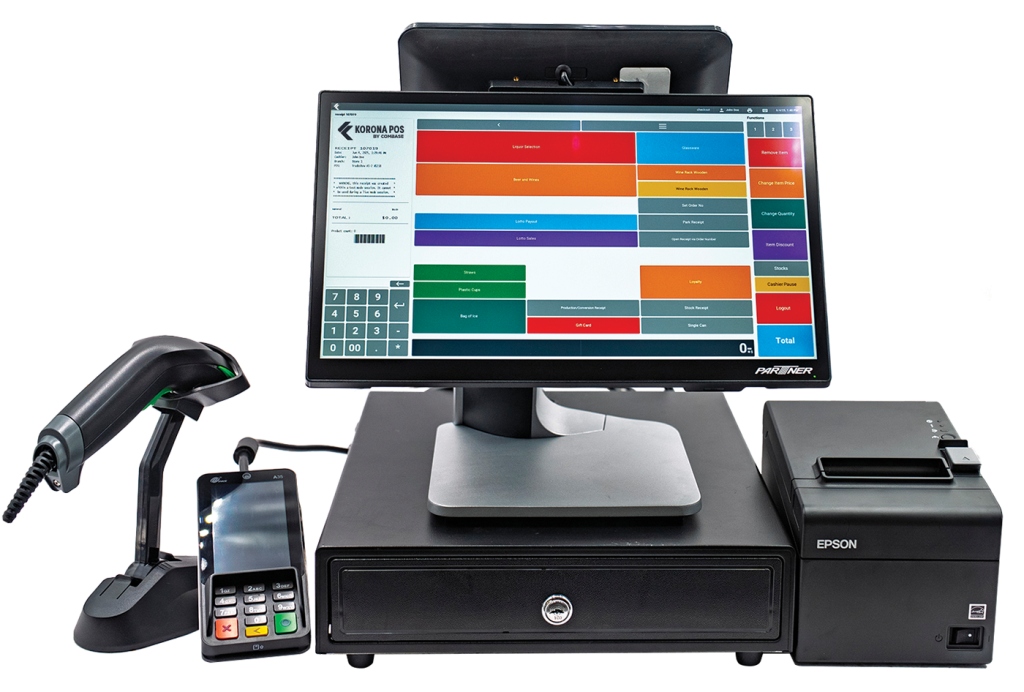
The right POS system simplifies surcharges by automating calculations, disclosures, and reporting. This reduces risk while keeping checkout transparent and compliant.
KORONA POS supports flexible pricing strategies, clear receipt breakdowns, and centralized control—helping retailers manage processing costs without sacrificing customer trust.