

The FTC, seven states, and California officials sued Toast on October 29, 2026. The Toast FTC lawsuit claims the restaurant POS company hid fees, billed customers for extra services they never approved, and made cancellation hard. Toast denies the claims.
Below, you will find what the complaint alleges, how Toast responded, and where the case stands.
You will also get seven contract terms for restaurant and retail owners to check in their own POS agreements, and a look at how a POS that works with any processor changes the cost of leaving.
Key Takeaways:
- Toast was sued on October 29, 2026 by federal regulators, seven state attorneys general, and local California officials from Los Angeles and San Francisco. Toast disputes the accusations, and a judge will decide them.
- The suit targets “$0” hardware pricing, 24/7/365 support promises, add-ons billed without consent, a multi-team cancellation path, and early termination fees of $150 per remaining month.
- Toast’s main defense is legal. The company argues that a consumer subscription law does not apply to negotiated business contracts.
- Restaurant and retail POS agreements commonly share similar components, so owners should audit their own terms now.
- With a processor-agnostic POS, the payment provider and the software stay separate, which reduces what switching either one costs.
What The FTC And States Allege Against Toast
The FTC and its state partners accuse Toast of concealing fees, charging customers for add-ons they did not authorize, and obstructing cancellation.
The 71-page complaint, submitted October 29, 2026 in the U.S. District Court for the Northern District of California, pairs federal counts under the FTC Act and the Restore Online Shoppers’ Confidence Act (ROSCA) with state consumer protection claims. The details below come from the FTC’s press release and the filed documents. None has been proven.
The FTC is the Federal Trade Commission, a U.S. government agency that enforces laws against unfair or deceptive business practices.
Its Bureau of Consumer Protection leads the Toast action, and the agency may seek injunctions and money for harmed customers from a federal court.
Hidden Fees And The $0 Monthly Plan
The lawsuit says Toast’s $0 Pay-as-you-Go offer concealed costs that restaurants paid later.
Toast advertised its Starter Kits at “$0/month” for restaurants needing one or two terminals, with hardware listed as “$0 to own” and higher card fees covering most costs.
The agencies contend none of that hardware is free. A restaurant that fails to start processing within 120 days must send the equipment back or pay its full retail value, a bill that sometimes reaches thousands of dollars.
The $0 price covers only the first terminal, and a note on extra devices sits around six scrolls down the page.
Early Termination Fees And Closure Charges
In the FTC’s account, a restaurant canceling its contract owes an early termination fee of $150 for each month left. A temporary closure still costs $85 per month for payment processing, the agency adds. Toast’s checkout screen labels that charge an inactivity fee, waived once the restaurant runs at least one card transaction within 90 days.
Cited examples include a $5,318.87 charge after four years of service and a $17,030.74 invoice sent to a business that canceled before equipment arrived. Court papers place the fee in Section 8.4 of the Merchant Agreement, on page 12 of 25, without a heading.
One detail complicates the picture. That same checkout screen declares Pay-as-you-Go customers exempt from a monthly early termination fee, and the complaint does not identify the plan behind its examples.
Billing For Add-Ons Without Consent
Customer complaints over unapproved add-ons are frequent, the FTC says.
Named examples include payroll processing, timekeeping, payroll tax filing, Toast Kiosk at $100 per device per month, and kitchen display systems at $35 monthly per device.
The filing puts subscriptions at close to $90 per location per month, and up, a level above the $0 Starter Kit and $69 Point of Sale prices Toast advertises.
In a March 2024 message quoted in the exhibits, a Toast employee recounts customers who ask for email marketing to be switched off and keep paying for it for months.
Cancellation And Toast Capital Loans
A core Toast subscription cannot be canceled online, and the FTC describes a process that passes through multiple teams:
- Written notice of intent not to renew, delivered at least 30 days ahead of the term’s end.
- A call to Customer Care, which lacks authority to process the cancellation.
- A transfer to a cancellation line staffed on weekdays from 9am to 5pm Eastern.
- A deactivation form filled out during the call, which takes about 15 minutes.
- Internal processing by another team, with the cancellation taking effect on that date.
Payroll subscribers go through a second round, with notice due 90 days before the payroll term ends.
Toast Capital adds another hurdle. Borrowers need Toast Capital’s advance permission to change POS providers, and the company holds the right to withhold it at its sole discretion.
Switching without approval counts as a default, and the FTC states that the entire balance then comes due immediately. The loan application omits that restriction, the agencies claim.
The 24/7/365 Support Claim
According to plaintiffs, Toast promised around-the-clock support even though some teams keep limited hours. The promise appears on nearly every page of Toast’s website and across all subscription packages, and more than 600,000 unique visitors viewed it.
The cancellation line and the Toast Capital care team answer calls solely during business hours, and the tax team goes quiet during quarterly blackout periods. One customer who phoned on a Saturday learned that the one team able to help was closed for the weekend.
Have trouble getting your POS customer service on the phone?
KORONA POS offers 24/7 phone, chat, and email support. Call us at 833.200.0213 to see how reliable we are.
The $0.99 Online Order Fee
Toast charged diners $0.99 on certain online orders above $10 between September 2021 and late July 2023, and kept the money, according to the FTC.
None of it reached restaurants that already paid for online ordering and processing.
The fee sat inside a “Taxes & Fees” line, and a tooltip failed to tell diners that Toast was the beneficiary, plaintiffs assert. Restaurants had no way to opt out. Toast scrapped the charge in late July 2023 after criticism, and the proceeds have not been refunded.
How Toast Has Responded
Toast strongly disagrees with the allegations and promises to fight them in court. The company reports cooperating with the FTC’s review since mid-2025, trying to resolve the matter ahead of litigation, and handing over information that shows its restaurant customers negotiate their contracts.
Its legal argument centers on ROSCA: no court has held that the law reaches negotiated agreements between businesses. Toast added that its customer service, pricing, and support stay unchanged.
Where The Case Stands
The Toast FTC lawsuit is pending in federal court in San Francisco, and no judge has ruled on any claim.
The docket reads FTC et al. v. Toast, Inc. et al., No. 3:26-cv-12705. The Commission voted 2 to 0 to file, and the presiding judge will settle the outcome. Plaintiffs are asking for a permanent injunction, monetary relief, and civil penalties. The parties have announced no settlement.
The ROSCA Question
ROSCA, a 2010 law, obliges online sellers of auto-renewing subscriptions to disclose material terms plainly, obtain express informed consent, and provide simple ways to stop recurring charges.
Counts IV through VI contend that Toast missed on all three, whereas Counts I through III rest on the FTC Act alone.
Toast argues that ROSCA addresses certain online subscription practices and should not reach negotiated contracts between businesses.
The complaint describes restaurant owners as small businesses and elsewhere labels them consumers, an overlap a judge must resolve.
Toast releases its third quarter 2026 earnings after the market closes on November 3, 2026, with a conference call at 5:00 p.m. Eastern.
Why The Case Matters For The Wider POS Industry
The action reaches past Toast because it tests how regulators treat auto-renewing POS and payment contracts sold online to small businesses.
Approximately 82% of Toast’s 2025 revenue, $5.037 billion of $6.153 billion, came from financial services such as payment processing and loans, the complaint states.
Subscriptions made up roughly 15% of the total, and hardware the remaining 3%.
Under that mix, a low hardware price gets recouped through higher processing rates, which fits the way the FTC’s case describes Pay-as-you-Go pricing.
Regulators have gone after comparable conduct before. First American Payment Systems agreed to return $4.9 million to harmed businesses in settling FTC claims over hidden terms and surprise exit fees, and the Commission mailed 5,588 refund checks totaling more than $2.6 million in February 2025.
The latest example arrived on November 2, 2026, when the FTC and Washington State announced a settlement with payment processor Riverside Payments.
The agencies assert that Riverside at times promised savings of 40% to 60%, omitted fees from its quote sheets, and buried a $695 early termination fee and auto-renewing contracts in a 26-page agreement.
Under a proposed order, Riverside, its affiliate, and their operators will pay $600,000.
The exposure extends beyond restaurants. Toast now describes itself as a platform for restaurant and retail businesses, and retail buyers encounter the same building blocks: subscriptions, processing agreements, hardware terms, and add-ons.
Seven Contract Terms Restaurant And Retail Owners Should Check Before Signing or Renewing
POS Contract Exit Cost Calculator
Estimate what it costs to leave a POS or payment processing contract, and when your notice is due. Results update as you type.
Early Termination Fee
Example values are filled in. Replace them with the figures in your own agreement.
Example value only. Your contract sets the actual amount.
Other Exit Charges
Fill in only if the contract makes you pay for hardware or return it when you cancel. Leave at 0 if you own it outright.
Add-ons, final billing cycles, or inactivity fees.
Fill in only if your vendor treats leaving as a default.
Notice Timing
Used to estimate the cost of missing the deadline.
Seven provisions deserve a close read in any POS or payment processing contract: early termination fees, renewal notice windows, hardware return rules, add-on enrollment, processing rates, loan clauses, and support hours.
The lawsuit centers on terms customers say went unnoticed, so track down each one before signing. Contract review here is general information, not legal advice.
Early Termination Fee Math
Multiply the monthly fee by the months left to see what an early termination fee will cost. At the $150 monthly rate the FTC cites, a restaurant with 20 months remaining would pay $3,000, and a convenience store with a year left would face $1,800. Find out where the contract defines the fee and whether it differs by plan.
Auto-Renewal And Notice Windows
Locate the renewal date and notice deadline, since a missed window extends the contract by another term.
Per the lawsuit, Toast subscriptions renew for one- or two-year periods, and notice is required 30 days ahead, or 90 days for payroll.
Set a reminder 60 days out and verify which delivery method counts as valid notice.
Hardware Return And Buyout Terms
Pin down what happens to the hardware if you cancel or never start processing.
A restaurant delayed by a renovation and a retailer waiting on a build-out might both miss a 120-day processing deadline.
Clarify whether the equipment is owned, leased, or conditionally free.
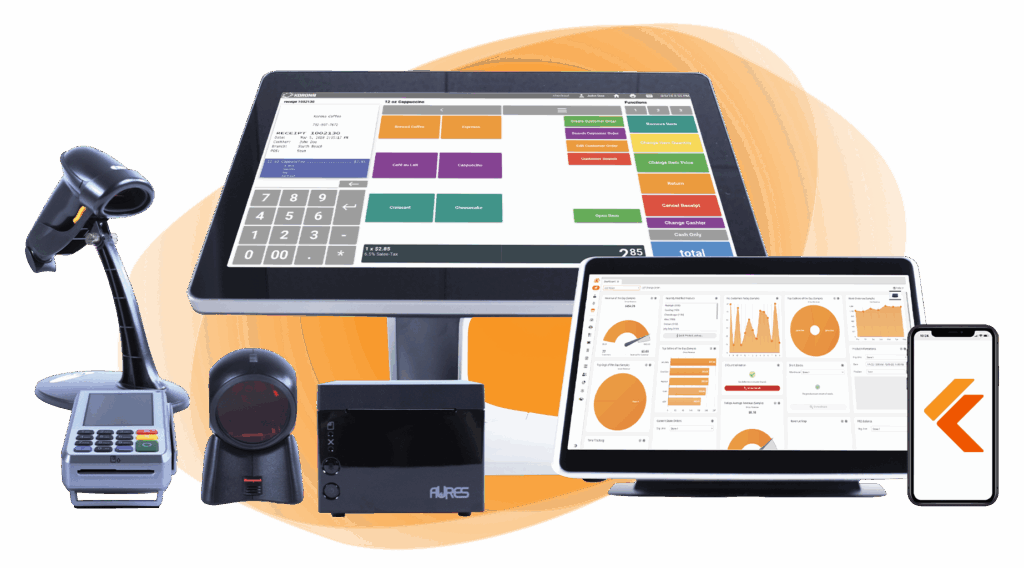
Build Your Own POS
Whether you run a retail store, café, or admissions booth, we have the point of sale hardware designed for your specific needs. Start building your ideal POS system now.
Add-Ons And How They Are Enrolled
Request an itemized list of all subscriptions and the way each one was switched on. Restaurant accounts typically carry payroll, kiosks, and kitchen displays; retail accounts lean toward loyalty, inventory, and email marketing modules. Match monthly statements against your own order records.
Processing Rates Behind Free Hardware Offers
Free hardware usually comes with a higher processing rate, so compare total cost across the whole term.
Obtain both pricing sets on paper and run them through the Toast POS cost calculator with your own card volume.
As a quick manual check, a 0.5 percentage point difference on $40,000 in monthly card sales equals $200 per month.
Financing And Loan Acceleration on Cancellation
Examine whether a loan or cash advance from your POS vendor restricts switching providers, a form of vendor lock-in.
A clause treating a POS change as default makes the balance due at once. Ask whether canceling software or changing processors triggers repayment, and get the answer in a signed document.
Support Hours in Writing
Secure support hours and response commitments in writing for all teams, including billing and cancellations.
A “24/7” label on a sales page does not reveal which team answers at 11pm on a Sunday. Weekend-heavy restaurants and late-open retailers should learn who handles outages and billing disputes.
How Processor-Agnostic POS Changes The Exit Math
A processor-agnostic POS works with multiple payment processors, so businesses keep their POS software when they switch payment providers.
When one vendor supplies both POS software and payment processing, ending one relationship tends to end both.
Under that arrangement, the software contract and the processing agreement stay separate. Each carries its own term, rate, and exit conditions, so changing one becomes a smaller project. The structure still leaves you with two documents to read.
KORONA POS is processor-agnostic and built for specialty retail such as liquor stores, smoke and vape shops, convenience stores, and CBD retailers, along with small cafés.
Speak with a product specialist and learn how KORONA POS can power your business.
Next Steps For Restaurant And Retail Owners
Start by pulling your current POS and processing contracts and marking the termination, renewal, and fee clauses. Then work through the list below.
- Collect written answers from your vendor on fees, add-ons, and support coverage.
- Reconcile monthly statements with the add-ons you selected.
- Follow the docket for case No. 3:26-cv-12705 to see rulings and filings as they land.
Retailers and small cafés comparing options can read up on processor-agnostic setups or talk with the KORONA POS team.
Frequently Asked Questions
Why is The FTC Suing Toast?
Federal and state enforcers filed suit on October 29, 2026, claiming Toast masked its fees, billed for unapproved add-ons, complicated customer exits, and overstated its “$0” hardware and “24/7/365” support promises. Toast has pushed back and plans to fight the suit.
What is The Toast Early Termination Fee in The Complaint?
The suit cites $150 per month for the remainder of a contract, charged when a customer cancels. One cited customer paid $5,318.87 on exiting at the four-year mark. Toast’s checkout language, shown in an exhibit, says Pay-as-you-Go customers face no monthly charge for early termination, and the examples leave the plan type unstated.
Can a Business Cancel Toast POS Early?
Yes, and the contract determines what an exit costs. The filed complaint lays out a written non-renewal notice 30 days prior to a term’s end, plus a fee for departing sooner. Read the Merchant Agreement and confirm the exact amount with Toast ahead of canceling.
What is ROSCA And Why Does Toast Say it Does Not Apply?
ROSCA is a 2010 federal statute covering online subscriptions that renew automatically, and it demands clear disclosure, express consent, and a simple way to cancel. Toast responds that no ruling has extended the statute to negotiated deals between companies.
Does The Lawsuit Mean Toast Customers Can Get Refunds?
Not yet. Plaintiffs want compensation for affected customers, restitution, and fines, but nothing has been decided and no resolution has been reached.
The First American Payment Systems case shows how it can play out: the settlement there produced refunds topping $2.6 million.
What Should a Restaurant or Retail Owner Check in a POS Contract?
Start with exit fees, renewal deadlines, equipment return rules, how add-ons get activated, processing pricing, loan covenants, and promised support hours. Get the answers confirmed by email and have a business attorney review the agreement.