


Key Takeaways:
- Your POS has to block restricted items. USDA says SNAP retailers must update their POS equipment, and following the waivers is a condition of taking SNAP.
- The rules differ by state. Each state has its own list of restricted items and its own start date.
- The window to prepare is short. USDA guidance points to compliance checks beginning 90 days after a state’s start date.
- The list keeps changing. A federal court has already blocked four states, so check USDA’s page before you change anything.
If your store accepts SNAP in a state with a food restriction waiver, your POS system has to block the restricted items at checkout. Eight states already enforce these rules, and five more start on November 1, 2026. The restricted items and start dates differ by state, so you need to check yours before your date arrives.
What the SNAP Food Restriction Waivers Are
A SNAP food restriction waiver lets a state stop SNAP benefits from paying for certain foods, usually soda, candy, and energy drinks. The state asks USDA for approval, and USDA decides which items the state can restrict. Federal officials say the goal is to steer SNAP dollars toward more nutritious food.
USDA has approved waivers in 23 states, according to its list updated October 2, 2026. Each state sets its own list of restricted items, so there is no single national list. A court has also blocked some waivers, which makes the picture harder to follow.
Why This Matters Most for Convenience Stores
Convenience stores are a large part of the SNAP retailer base. A Convenience Store News column estimates that about 117,000 convenience stores, more than 75 percent of the country’s total, are authorized to take SNAP.
Soda and candy are everyday products in these stores, so the new rules touch items your shoppers already buy. A C-store POS setup that works the first time keeps those sales moving.
Which States Restrict SNAP Purchases Right Now
Eight states already enforce restrictions: Indiana, Utah, Idaho, Oklahoma, Louisiana, Texas, Florida, and Arkansas. Indiana and Utah started on January 1, 2026, and Arkansas was the most recent, on July 1.
If your store is in one of these states, your POS should already be blocking restricted items. According to goEBT’s summary of USDA guidance, USDA can start compliance checks 90 days after a state’s start date. That window has passed in all eight states.
Which States Start Next
Five states start on November 1, 2026: Montana, North Dakota, Ohio, South Carolina, and Virginia. Nebraska follows on December 1, and it adds candy on March 1, 2027.
Wyoming, Kansas, Missouri, Hawaii, and Nevada have dates between February 2027 and February 2028. The table below lists every state with a waiver in effect or on the calendar.
Source: USDA Food and Nutrition Administration, page updated October 2, 2026. Colorado, Iowa, Tennessee, and West Virginia are not shown because a federal court blocked their waivers on June 22, 2026. Check USDA’s waiver page and your state’s retailer page for the latest details.
States Where a Court Blocked the Waiver
On June 22, 2026, a federal court in Washington, D.C. ordered USDA’s approvals for Colorado, Iowa, Tennessee, and West Virginia vacated. The court said those waivers may not proceed. USDA’s page cites the case as Aragon v. Rollins.
USDA has told retailers in Iowa and West Virginia to stop implementing their restrictions. Waivers in other states could be challenged too, so do not assume the list you see today will stay the same.
Why One POS Setup Does Not Fit Every State
The restricted items are not the same everywhere. Ohio restricts sugar-sweetened beverages and all fountain drinks, while Virginia restricts only sweetened beverages. Florida and Montana add prepared desserts, and Arkansas covers fruit and vegetable drinks with less than 50 percent natural juice.
Nebraska phases in its rules, starting with drinks and adding candy in March 2027. Say Marta runs stores in both Ohio and Virginia: her Ohio POS must block every fountain drink, while her Virginia POS only blocks sweetened ones. One setup will not work for both.
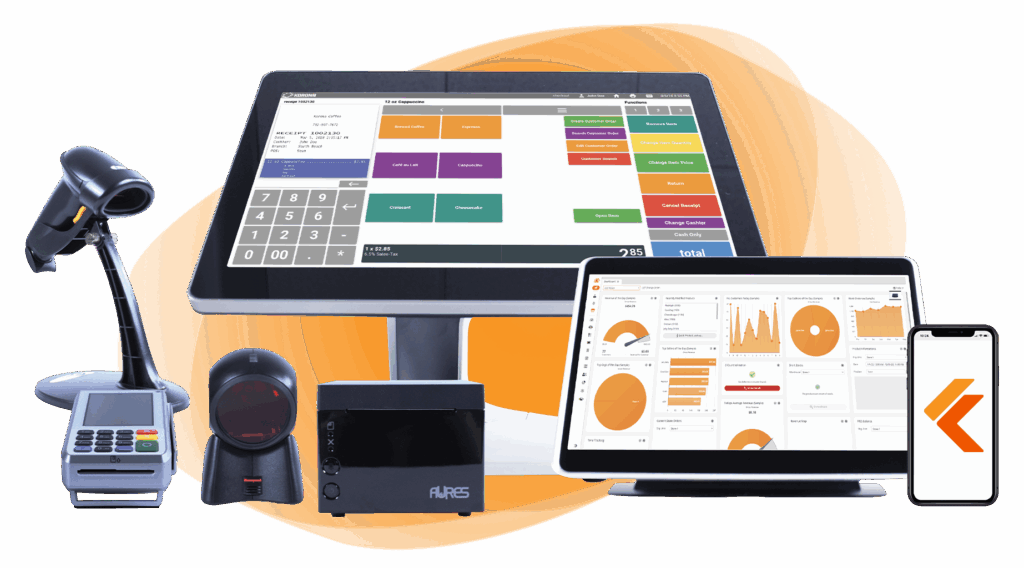
Build Your Own POS
Whether you run a retail store, café, or admissions booth, we have the point of sale hardware designed for your specific needs. Start building your ideal POS system now.
How SNAP Payments Work at the Register
A SNAP customer swipes an EBT card and enters a PIN, and the amount for eligible food comes out of their SNAP balance. USDA’s retailer fact sheet says the clerk enters the exact amount of the food purchase.
Under the new rules, that eligible total must leave out restricted items. Your POS has to do that sorting, so a cashier is not guessing which items count.
What USDA Requires From Retailers
USDA says SNAP retailers must update their POS equipment, train employees, and make other preparations. It has also decided that SNAP-authorized retailers must comply with these waivers as a condition of accepting SNAP. You can read the details in the USDA’s retailer compliance memo.
The memo also covers online orders and deliveries, so read it if you sell SNAP items online. A separate USDA rule on staple food stocking has a November 4 deadline, so many convenience stores are dealing with both at once.
What Happens if Your POS Does Not Block Restricted Items
USDA’s memo says state agencies may use SNAP EBT cards to run test purchases at stores. Louisiana has said there are no exemptions for retailers that can’t update their systems right away. Compliance checks can begin 90 days after a state’s start date.
Not following the rules can bring compliance warnings and other action under federal rules for SNAP retailers. You can ask for an administrative review of a decision. Check your state’s retailer page for the exact process.
Who Pays for the POS Update
The states have put the work on retailers. Nebraska’s retailer FAQ says retailers are responsible for updating their POS systems. South Carolina’s attestation form has retailers acknowledge that they cover any POS upgrade costs.
Costs depend on your POS provider and how your system flags items. Ask early what the update costs and how long it takes, so you are not waiting on it near your start date.
A Timeline for the November 1 States
If you operate in Montana, North Dakota, Ohio, South Carolina, or Virginia, your update needs to be ready by November 1. Using the 90-day pattern, compliance checks could start around the end of January 2027. Check your state’s retailer notice for its exact timing.
Finish your POS changes and staff training before your start date. Then use the first weeks to catch problems with real transactions, before checks begin.
What Customers Will Notice at Checkout
Shoppers may not know the rules changed, so expect questions at the register. When a restricted item is in the cart, the system asks for another form of payment for that item, as Louisiana describes it.
Put a short sign at the register and brief your cashiers. Say Priya manages a store in Texas: she posts a notice by the card reader listing candy and sweetened drinks, so cashiers are not explaining the rule from scratch.
Free printable templates and checklists to help you manage retail operations with ease
How to Update Your POS Before Your Start Date
To be up to speed with SNAP updates, work through these seven steps in order:
Step 1: Confirm Which Rules Apply to Your Stores
In-store sales follow the rules of the state where the store is located. If you have stores in more than one state, make a separate list for each one. USDA’s memo covers how online orders work.
Step 2: Get Your State’s Item Definitions
Your state agency decides exactly what counts as a restricted item. USDA’s waiver page links to each state’s retailer page and, in many cases, a retailer email address. Nebraska says its agency will help retailers identify restricted products.
Step 3: Flag the Restricted Items in Your Catalog
Your POS needs to know which products are restricted, by category or by item. Start with drinks and candy, since every state restricts at least one of them. Then add energy drinks and prepared desserts where your state lists them.
Step 4: Test Mixed Baskets
Run test sales with SNAP and non-SNAP items in the same cart. Say Tomas owns a store in Ohio and rings up chips, a bottled soda, and a fountain drink. The chips can go on SNAP, but the POS should ask for another form of payment for both drinks.
Also test these cases:
- A cart with only eligible items, paid fully with SNAP
- A cart with only restricted items
- A mixed cart split between SNAP and another payment type
- A return or void of a restricted item
Step 5: Train Your Staff
Cashiers need to know what the POS will do when a restricted item is in the cart. Give them a simple line to use, such as telling the customer that the item cannot be paid for with SNAP in your state and asking how they would like to pay.
Step 6: Complete Any State Paperwork
Some states ask retailers to sign attestation forms. Louisiana and South Carolina both do, and South Carolina says a missing form can lead to compliance warnings. Check your state’s retailer page to see whether yours requires one.
Step 7: Recheck When Rules Change
Dates, definitions, and court rulings change. Recheck USDA’s waiver page each month, and look at your state’s retailer page for updates.
PRO TIP!
Keep one folder per store with your test results, the date you updated your POS, copies of any signed forms, and your emails with the state agency. If a state asks questions about your setup, you can show what you did and when. It also gives you a starting point each time the rules change.
Questions to Ask Your POS Provider
Ask your POS provider these before your start date:
- Can the POS flag restricted items by category, by item, or both?
- Will it split a cart so SNAP pays only for eligible items?
- How do you handle updates when a state changes its list?
- Does the setup work for stores in more than one state?
- What does the update cost, and how long does it take?
If Your State Has No Waiver Yet
Most states do not have a waiver, but that can change. USDA’s waiver page tracks approved waivers, and its map also marks requests that are waiting on a response.
Check your state SNAP agency’s website for news about a request. If your state is added, use the steps in this guide, because the start date and item list will be new.
Get started with KORONA POS today!
Explore all the features that KORONA POS has to offer with an unlimited trial. There’s no commitment or credit card required.
SNAP Restrictions: Frequently Asked Questions
Why did a court block some waivers?
The judge ruled that USDA went beyond its legal authority, because Congress defines what counts as food in SNAP, and that USDA skipped a required public notice step. The ruling applies only to the five states in the lawsuit, and USDA has appealed. Law firm analyses say it could still affect other waivers and future requests.
Have any start dates moved?
Yes. USDA asked South Carolina and Ohio to delay so it could collect public comments, according to Food Dive. Both now show November 1 on USDA’s page, so check that page for your state’s current date.
Are diet sodas restricted?
It depends on the state. Reports say Arkansas’s approval covers low and no-calorie soda, and Texas’s covers artificially sweetened beverages. Other states use sugar-based wording, so read your state’s definition.
What can’t SNAP buy under standard federal rules?
SNAP cannot be used for alcohol, tobacco, gasoline, or lottery tickets, among other items, according to a 2024 convenience store association article. The state waivers add to that list in the states that have them.
Can retailers comment on a waiver?
Yes. USDA publishes a Federal Register notice for each state and accepts written comments through Regulations.gov. Each notice lists its deadline, and comments on Nebraska’s new request are due November 2, 2026.